
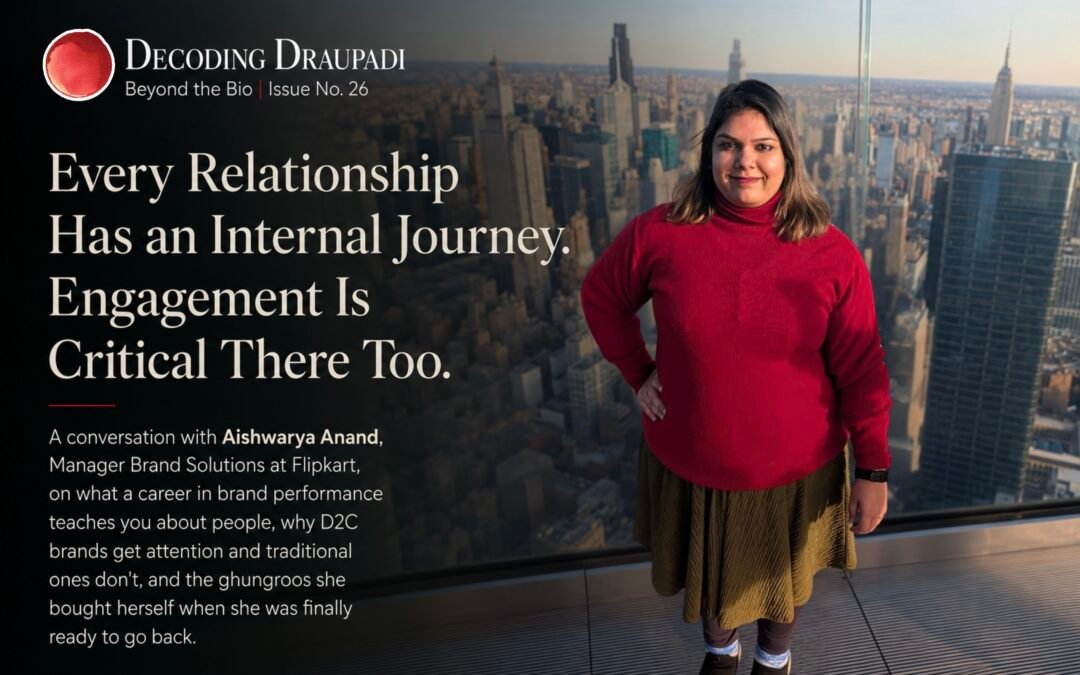
A conversation with Aishwarya Anand, Manager Brand Solutions at Flipkart, on what a career in brand performance teaches you about people, why D2C brands get attention and traditional ones don’t, and the ghungroos she bought herself when she was finally ready to go back.
Aishwarya Anand spends her days thinking about brand performance at Flipkart: what holds attention, what drives conversion, what makes someone actually stop and engage. She is also, outside of all of that, a Bharatanatyam dancer, a devoted aunt, a sister who gives her sister full credit for who she has become, and a wife who uses the word cherish without any self-consciousness at all.
This conversation moves between the professional and the personal in a way that Aishwarya does not seem to separate. For her, the two are teaching each other something. That comes through.
Ghungroos, Gratitude, and Toddler Tantrums
Who is Aishwarya right now, across the different lives she is living?
The most recent role I have taken up is that of an aunt to my nephew and niece. It’s really joyful. You get to develop yourself personally too, learning to be patient, dealing with conflict and toddler tantrums, and understanding how heavily kids are influenced by their environment.
Along with this, I am an enthusiastic dancer with big ambitions and dreams, and immense fear of failure. I truly find peace in dancing. It brings calm, focus, and a need to constantly improve every time.
I am also a sister. I am blessed with and immensely grateful for the relationship I have with my sister. I always credit her push and encouragement for making me who I am today.
And lastly, but most importantly, I am a wife. I’ve been married for two and a half years, known my husband for about five, and every day I cherish and feel immensely grateful to have a partner who is emotionally available and extremely supportive.
“I truly find peace and pleasure in dancing. It brings a sense of calm, focus, and I need to constantly improve myself every time I dance.”
The fear of failure alongside the big ambitions and dreams: she names both in the same breath, without trying to resolve them. Most people either lead with the ambition or lead with the fear. Aishwarya holds both at once, and I think that honesty sets the tone for the whole conversation. She is not performing certainty she does not have.

Every Relationship Has an Internal Journey
Does constantly thinking about engagement and conversion change the way you experience people and relationships in your own life?
Yes, actually. A lot of my work is understanding what the performance metric is, how conversion has improved, and similar questions. But I believe that just like any brand journey, there is an internal journey with all the people in your life too. Depth of engagement is critical there as well, and continuous engagement is what helps a relationship grow.
So honestly, my roles have really helped me learn from people. They’ve reinforced how much communication matters: who you are speaking to, how you are speaking, and what you are doing to actually help resolve issues.
“Similar to any brand journey, there is an internal journey with all the people in your life. Depth of engagement is critical there too.”
This is such an unusual answer to this question. Most people either say yes, it has made me more analytical and that is a problem, or no, I keep work and life separate. Aishwarya is saying something different: the framework has genuinely helped her. She is not troubled by the overlap. She finds it useful. That is worth paying attention to, because it says something about how she actually thinks about people, at work and outside it.
Culture Is Determined by the Efforts Everyone Puts In
What is the most important thing you do at work that has no name in a job description and no metric attached to it?
Being part of the Ads Fun Committee. It’s a committee meant to encourage fun activations within the team, and I’ve been part of it for roughly two years now.
It matters because the culture of a team is determined by the collective efforts everyone puts towards building it. Engagement activities, even the small ones, shape how people feel about showing up. That work is invisible in every formal sense, but it is felt.
“The culture of a team is determined by the efforts put by all team members towards it. That work is invisible in every formal sense, but it is felt.”
I liked that she did not reach for something that sounds more impressive. She could have named a cross-functional coordination task or a behind-the-scenes strategic thing. She named the fun committee, and she named it with conviction. That tells you something about how she thinks about what actually matters in a workplace. Culture is not a side project. It is the thing that makes everything else possible.
The Ghungroos
The first time you spent your own money on something that wasn’t practical, something just for you. What was it?
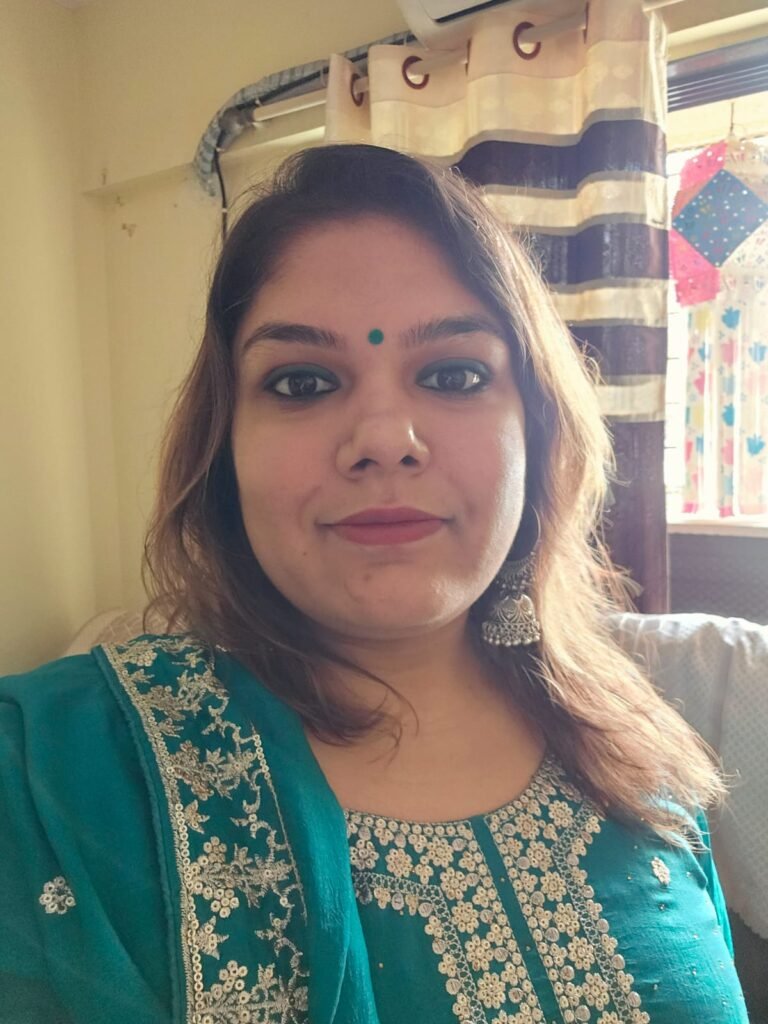
The first time I spent money on something purely for myself was a Bharatanatyam ghungroo set. I was ready to restart my dance journey after a break, and that purchase marked the beginning of going back.
That day I felt proud, excited, and delighted to restart the phase of my life I had missed out on. It was not just a purchase. It was permission.
“It was not just a purchase. It was permission.”
She did not use that word, I added it in the editorial, but I think it is exactly what she is describing. The ghungroos were not the dancing. They were the declaration that she was going back. That she was ready. There is something about buying the thing before you feel fully certain that is its own act of courage. She bought the ghungroos. The rest followed.
D2C Brands Get It. Traditional Ones Are Still Catching Up.
What do most brands still misunderstand about what genuinely holds people’s attention today?
From the brands I closely work with, you can broadly divide them into two: D2C brands and traditional companies.
D2C brands have genuinely evolved in their thinking. They understand what holds attention today: social media creators, performance marketing through Meta and Google, and real people who are actually relatable to their customers. They are not trying to manufacture credibility. They are finding it where it already exists.
Traditional companies, on the other hand, still largely misunderstand this. They continue to rely on conventional mediums and conventional authority, often without asking whether their audience is still there.
“D2C brands find credibility where it already exists. Traditional companies are still trying to manufacture it.”
She works with both kinds of brands at Flipkart, so this is not theoretical. It is observed. And the gap she is describing, between brands that have genuinely changed how they think and brands that are still broadcasting in the old direction, is one of the defining tensions in Indian marketing right now. She names it cleanly and without drama, which is exactly the right register for an observation this obvious that most people still cannot act on.

The Outcome May Not Be in Your Control. The Process Is.
What would you want someone just beginning their journey to worry less about?
Worrying about the outcome so much that it stresses you out. That is what I would not recommend anyone feel at the beginning of their journey.
It is a fairly structured process. First, try to identify your likes and dislikes. From your likes, try to map your skills. Then work really hard to bring those two things together. The rest, especially the outcome, may not be in your control.
What I would really suggest is not to get so worked up about the process and the journey that it hampers your mental peace or health. The direction matters. The destination will follow.
“The outcome may not be in your control. Don’t let worrying about it cost you your mental peace.”
The three-step process she lays out is genuinely useful: likes, then skills within those likes, then the work of bringing them together. Most career advice skips the middle step, the honest mapping of what you are actually good at within the things you enjoy. She has put that in the centre, and she has done it quietly, without making it sound like a framework. It just sounds like something she worked out for herself and is now sharing.
A Note From Decoding Draupadi
What stayed with us from this conversation is the ghungroos. The specific act of buying the thing before you feel ready. Of spending money on something that is purely yours, that marks a return to a part of yourself you had set aside.
Aishwarya did not frame it as a brave decision. She just said she felt proud. Excited. Delighted. And that is enough. Sometimes the most important things we do for ourselves are also the quietest.
If this felt like someone you know, share it with her.
Aishwarya Anand is Manager, Brand Solutions at Flipkart. This interview was conducted as part of the Decoding Draupadi Brand Manager Series.
Don’t let worrying about the outcome cost you your mental peace. For everyone at the beginning of something, find us at @decodingdraupadi.