
“If you can run a company, are you telling me you can’t raise children?”
That was Gulnar Virk’s nani, on the other end of a phone call, cutting through a sleepless, hysterical night of postpartum depression with one Punjabi sentence.

Gulnar never forgot it, and once you hear the rest of her story, you understand why. It is a line about capability, yes, but it is really a line about never underestimating yourself, even on the nights you feel like you have nothing left to give.
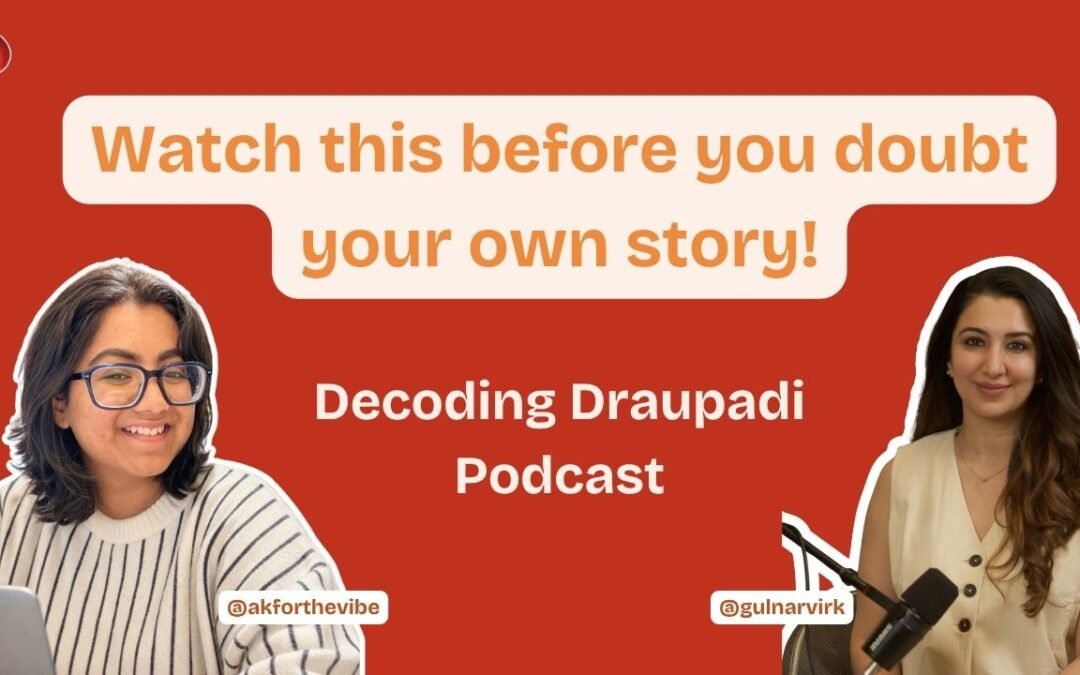
At Decoding Draupadi, we aim to push forward more female voices and share stories of SUPER women who are rewriting their stories.
Gulnar Virk is the Founder and Managing Director of HashTag Marketing, an integrated communications agency with offices in Hyderabad and New Delhi that has built brand and PR campaigns for more than 450 brands, from Louis Vuitton to Lay’s. She started the company from the basement of her family home, with her study table as her first desk, and grew it into a team of over thirty people. She is also a mother of two boys, a certified children’s yoga teacher, and the host of her own podcast, The FlipSide. We sat down with Gulnar to talk about building HashTag Marketing from scratch twice, once in Delhi and once in Hyderabad, what conscious parenting actually looks like in her house, and why she now refuses to call her marriage a marriage at all.
Here are our key takeaways from our chat:
1. Financial independence is not about the money. It is about never having to ask permission.
Gulnar traces a lot of her confidence back to one piece of advice from her mother, who held her hand and told her that whatever life throws at her, she needs to be financially independent. It is the kind of line that sounds simple until you notice how many women’s lives quietly bend around not having it. A lot of women stay in situations that stopped serving them years ago, not because they lack the will to leave, but because they cannot afford to. Financial independence, seen that way, is not really about money at all, it is about the ability to walk away from anything that no longer fits.
This isn’t just a personal philosophy either, it’s backed by research. Financial independence genuinely changes the decisions women feel free to make, from leaving an unfulfilling job to walking away from a relationship that isn’t working. A woman’s financial agency is inseparable from her personal agency, the two rarely exist without one another. You cannot fully own your choices if you do not also own your bank account, and that ownership is worth protecting long before you ever need to use it.
2. Marriage should expand your life, not shrink it.
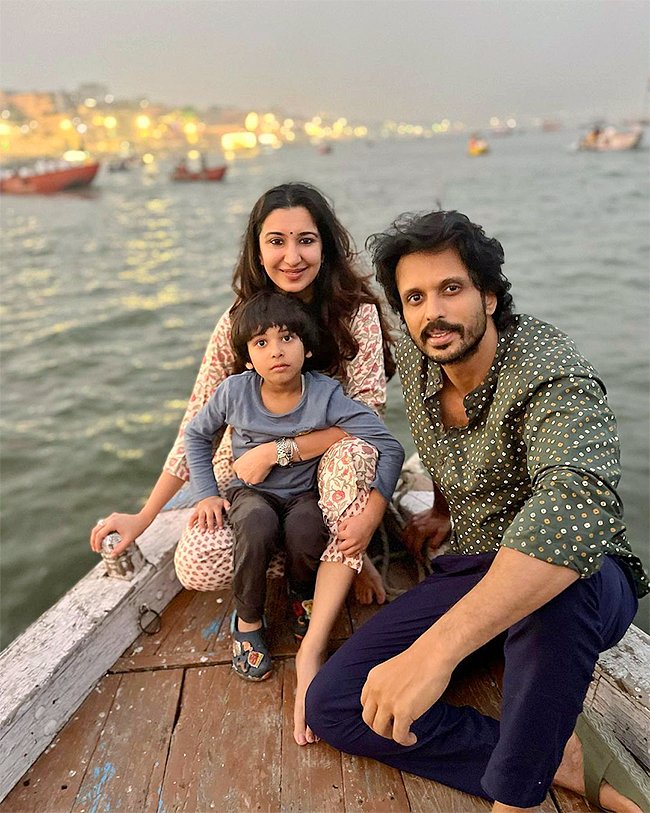
There’s a common assumption that marriage is the final stop, the destination you spend your twenties working toward and then simply arrive at. That idea gets rejected here, completely and on purpose. An equal partnership, not a marriage, better describes what this relationship has become, because the word marriage carries too much baggage about who is supposed to give up what, and how much, and for how long. Reframing it as a partnership isn’t a semantic trick, it changes the terms of what each person actually owes the other.
Research on equal partnerships backs this up: couples who treat the relationship as a team sport, without one person quietly managing everything behind the scenes, tend to be happier and better parents too. At Decoding Draupadi, this is a theme that keeps surfacing across conversations with different women, in different cities, living completely different lives. The best relationships are the ones where both people are still becoming, together, rather than one person’s growth being quietly sacrificed for the others.
3. Asking for help is not weakness, it’s the whole point of having people around you.
Postpartum depression rarely announces itself gently, and it didn’t here either. After the birth of a second child, feeling unable to keep up, a tearful phone call to a grandmother became the moment that cut through the worst of the night. That moment wasn’t dressed up or softened in the retelling, it was simply allowed to be as messy as it actually was, which is rarer to hear out loud than it should be. Nobody figured this phase out entirely alone, and pretending otherwise would defeat the point of talking about it at all.
If you or someone you know is navigating something similar, organizations like Postpartum Support International exist specifically so no woman has to sit with that feeling by herself. The myth of doing it all solo is exactly that, a myth, dressed up as a virtue. There’s usually someone, a friend, a sibling, a grandmother on the other end of a late-night call, who picks up the phone at exactly the right moment and says the one thing that needed to be said.
4. Conscious parenting means unlearning before you can teach anything.
Conscious parenting sounds abstract until it gets broken down into what it actually requires: studying how you were parented, noticing which patterns you’d rather not repeat, and deliberately choosing differently instead of defaulting to whatever got passed down. That kind of effort took real, visible work, credited in large part to a husband who kept pushing both partners to sit with it together rather than leaving it to one person. It isn’t a switch you flip once when a child is born, it behaves more like a daily correction.
This takes work from both people, since one partner cannot carry the entire emotional load of “getting it right” for a child. That mirrors what a lot of modern parenting research is now confirming: awareness of your own upbringing, more than any parenting hack or routine, is what actually breaks harmful cycles. You cannot build something healthy for the next generation, whether that’s a child at home or a junior colleague at work, without first being honest about what shaped you.
5. The quiet work happens before anyone sees you speak.
Gulnar’s team has a nickname for her: “marketing Brahma.” It sounds like it describes a gift, but what looks effortless in a pitch meeting is actually hours of silent observation that happened long before anyone walked into the room. Watching how a brand is already perceived, what people believe about it without being told, what they aren’t saying out loud, before a single word gets pitched to sell anything. The pitch itself is the visible ten percent; the rest is unglamorous groundwork nobody claps for.
It’s a reminder that good observation is often the real differentiator in any client-facing business, long before the pitch itself gets written. The best questions in any conversation usually come from listening closely to something said ten minutes earlier, not from a prepared script. That kind of attentiveness is a skill built over years, not a personality trait some people are simply born with.
6. Older women deserve to take up space too, including at the gym.
Fitness content and gym culture are almost entirely built around the young: tight timelines, quick recovery, bodies that bounce back within weeks. Older women are rarely shown lifting anything heavier than light dumbbells, if they’re shown at all, and that absence sends its own quiet message about whose strength gets considered worth celebrating. Women over sixty can lift weights too, and that fact deserves to be said plainly and repeated often, not treated as a surprising exception to some unspoken rule.
It’s a small point in the middle of a much longer conversation, but it says a great deal about how visibility works for women at every life stage, not just the ones marketing usually targets. At Decoding Draupadi, this is exactly the kind of representation gap worth pointing at again and again, because a woman’s story doesn’t stop mattering once she turns forty, fifty, or sixty.
That’s everything we have for today but there’s so much more that came out of this conversation with Gulnar. From basement offices to boardrooms, from postpartum darkness to equal partnership, her story is a reminder that ambition and softness were never meant to be opposites.
Until next time
Team Decoding Draupadi