DECODING DRAUPADI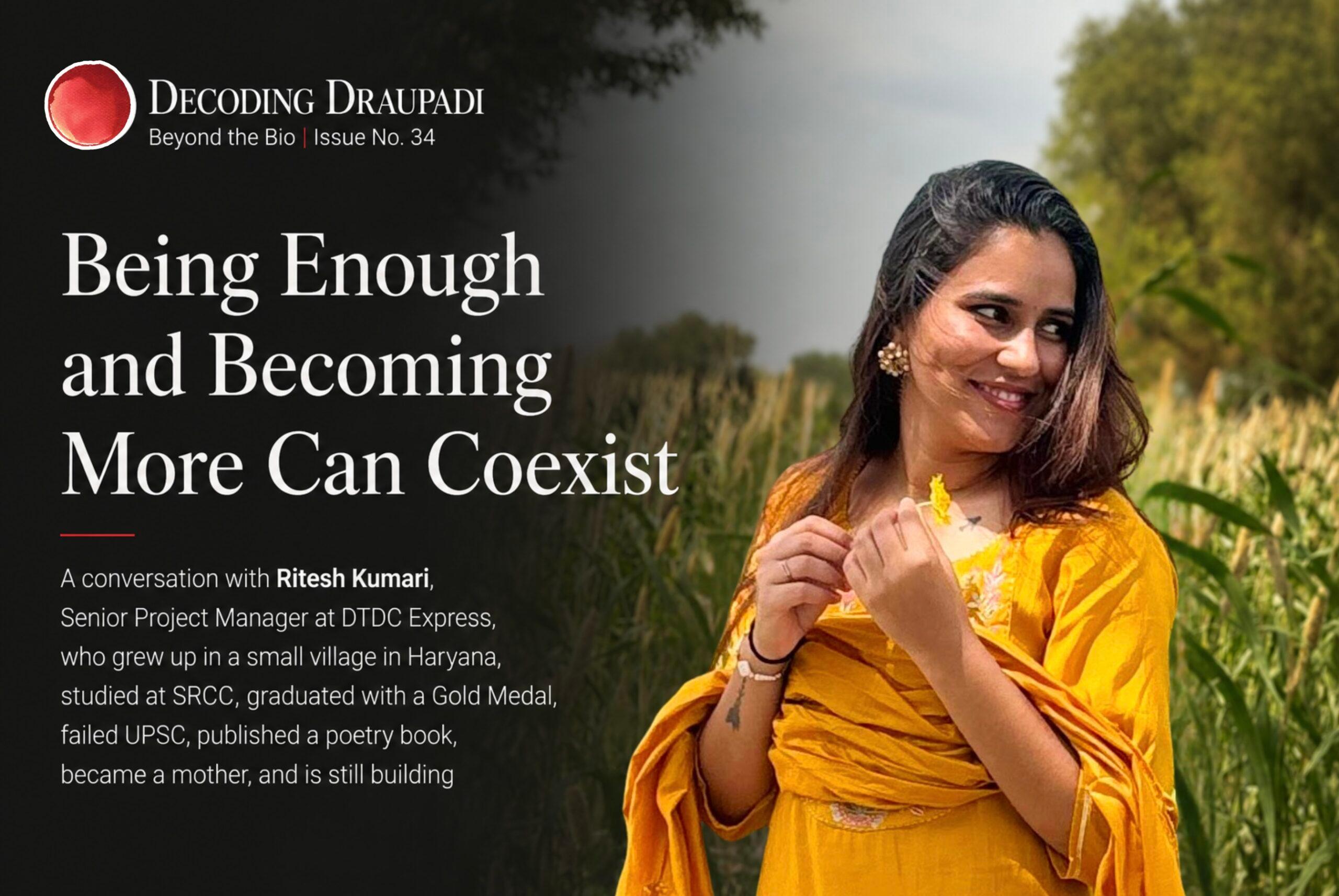
A conversation with Ritesh Kumari, Senior Project Manager at DTDC Express, who grew up in a small village in Haryana, studied at SRCC, graduated with a Gold Medal, failed UPSC, published a poetry book, became a mother, and is still building
Ritesh Kumari’s story does not move in a straight line. It moves through a Jawahar Navodaya Vidyalaya in Haryana, through SRCC where she felt like she did not belong and then graduated with a Gold Medal, through IIM Bangalore, through two years of UPSC preparation and a prelims failure that shook her more than she expected, through a poetry book called Ishq, Intezaar Aur Main, and now through early motherhood and building systems like internal startups at DTDC.
None of those pieces seemed connected when she was living them. Reading this conversation, you can see how they were.
Several Lives at the Same Time
Who is Ritesh right now, across the different lives you are living?
For the first time, she says, she is learning to embrace all of them.
Professionally, she works in strategy and business development, building new initiatives that feel more like startups within a large organisation. She enjoys solving messy problems, creating something from scratch, figuring things out where there is no clear playbook.
Personally, she recently became a mother. That identity has changed her in ways she never expected. It made her more patient, more grounded, and, surprisingly, more ambitious. Earlier, ambition was mostly about proving something to herself. Today, it is also about creating a life that her son Avyukt can look at one day and feel proud of.
There is also a side most people at work do not see. She writes poetry. She recently published her first book, Ishq, Intezaar Aur Main. Writing, she says, has been her way of understanding herself long before she learned to express herself confidently in conversations.
For someone who spent years trying to prove herself, she is now learning that being enough and becoming more can coexist.
“I am learning that I don’t have to choose between being ambitious and emotional, corporate and creative, a mother and a professional. All of those versions are me.”
The poetry book detail is the one to hold onto. She did not mention it as an achievement. She mentioned it as a coping mechanism, a way of understanding herself. That is a different thing entirely, and it says more about her than any title does.
Responsibility Without Complete Control
What do people misunderstand about leadership or ownership until they actually experience it firsthand?
Many people think leadership is about authority or having the final say.
In reality, she says, leadership often feels like responsibility without complete control. You are accountable for outcomes, but you rarely control all the variables. You have to influence people who do not report to you, navigate uncertainty, make decisions with incomplete information, and keep moving even when there is no clear answer.
The other thing people underestimate is how much emotional resilience ownership requires. When something succeeds, everyone sees the result. When something is stuck, you are often carrying the mental load long before anyone else notices.
The biggest leadership lesson she has learned: ownership is not about having all the answers. It is about being willing to stay with the problem long enough to find them.
“Ownership isn’t about having all the answers. It’s about being willing to stay with the problem long enough to find them.”
Responsibility without complete control is one of the most accurate descriptions of what leading cross-functional work actually feels like. No direct authority. Full accountability. The people who handle it well are the ones who have made peace with that gap.
Competence Alone Does Not Guarantee Opportunities
What did adulthood or corporate life teach you that no one really prepares you for?
That competence alone does not guarantee opportunities.
Growing up, she believed that if she worked hard and delivered results, everything else would follow automatically. Corporate life taught her that visibility, communication, relationships, and trust matter just as much.
For a long time, she was uncomfortable talking about her achievements because she felt her work should speak for itself. Over time, she realised that if people do not know the value you are creating, they cannot support your growth.
The other lesson: very few people actually have everything figured out. As children, adults appear confident and certain. As adults, you realise most people are learning as they go, just with different levels of experience. That realisation, she says, was surprisingly freeing.
“If people don’t know the value you’re creating, they can’t support your growth.”
The discomfort with self-advocacy is one of the most common things women in this series name, and one of the least discussed in formal professional development. Ritesh’s framing is precise: it is not about self-promotion. It is about making sure the value you create is visible enough to be supported.
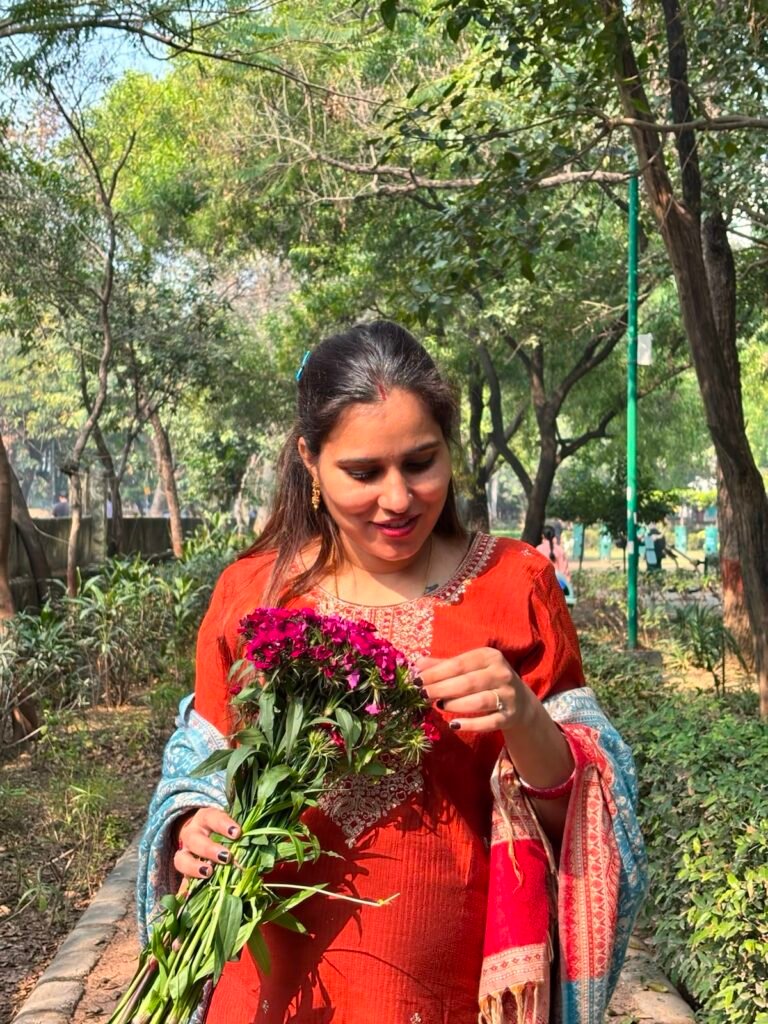
Growth Feels Expansive. Survival Feels Exhausting.
How do you personally know when you are growing, versus just surviving?
When she is surviving, her world becomes very small. She focuses only on the next deadline, the next task, the next problem. Everything feels reactive.
When she is growing, curiosity returns. She starts asking bigger questions, makes time to learn, thinks beyond immediate deliverables, and invests in things that may not show results right away.
The question she asks herself: am I only solving today’s problems, or am I building something for tomorrow? If the answer is the latter, she knows she is growing.
“Growth feels expansive. Survival feels exhausting. The difference is whether curiosity has come back.”
That question, solving for today versus building for tomorrow, is a useful diagnostic for anyone. The answer is not always comfortable. But it is almost always accurate.
The UPSC Failure That Untied Her Identity from Her Achievements
What is one belief about success or career growth that you have had to unlearn over time?
She had to unlearn the idea that success is about collecting prestigious achievements.
For a long time, her identity was closely tied to performance. She was always the student who topped classes, won medals, and met expectations. Then came UPSC preparation. Two years of it. When she failed the prelims for the first time, it shook her deeply. It was not just an exam result. It was her first major academic failure. Until then, she had unconsciously built much of her self-worth around succeeding.
Looking back, that phase taught her something success never could. It forced her to separate who she is from what she achieves.
Today, she does not think success is about never failing. She thinks it is about having the courage to change direction when life shows you a different path, and not letting a single outcome define your worth.
“That phase forced me to separate who I am from what I achieve.”
The UPSC failure is the hinge of this whole piece. Every version of Ritesh that came after it, the corporate strategist, the poet, the mother, was shaped by what she learned when the thing she had built her identity around did not work out. That is not a setback story. That is a becoming story.

Ambition Aligned With the Life She Wants to Live
Do you think ambition becomes healthier or more complicated as you grow older?
Both, she says.
More complicated because life becomes fuller. Career is no longer the only thing competing for attention. Family, relationships, health, personal dreams, responsibilities, all begin to matter deeply.
But healthier too, because you start questioning whether you are chasing goals that genuinely matter to you or goals that simply look impressive from the outside.
One of the hardest decisions in her professional journey was stepping away from a potential high-paying investment banking path and moving toward general management roles. On paper, it may not have looked like the most ambitious choice. But she realised that she wanted a life where success was not measured only by compensation or titles. She wanted room for family, relationships, creativity, and experiences beyond work.
Money is important, she says. It creates security and opportunities. But the people we love rarely remember how much we earned. They remember whether we were present.
Ambition has not disappeared. It has simply become more aligned with the life she wants to live.
“The people we love rarely remember how much we earned. They remember whether we were present.”
Stepping away from investment banking is not a small thing to name plainly. Most people in that position either do not make the move or make it without saying it out loud. She says it directly. And the reason she gives is not about work-life balance or burnout. It is about what she actually wants her life to look like.
The Moments That Stay
What kind of work gives you the deepest sense of satisfaction, beyond titles, increments, or external validation?
The work that genuinely improves someone’s life.
Professionally, she enjoys building systems, solving problems, and creating structures that help organisations function better. But what gives her the deepest satisfaction is when her work helps reduce unnecessary hierarchy, ease power dynamics, or enable people to contribute more effectively. She has always believed the best systems are the ones where value comes from ideas and contributions rather than titles alone.
Outside work, the same sense of fulfilment comes from mentoring students, helping someone prepare for an important interview, or writing something that makes another person feel understood.
The common thread is impact. The moments she remembers most are not promotions or appraisals. They are the moments when someone tells her: what you did genuinely helped me.
“The moments I remember most aren’t promotions or appraisals. They’re the moments when someone says: what you did genuinely helped me.”
She has named exactly what impact feels like when it is not dressed up as performance. It is not the big moments. It is the specific, quiet ones where another person’s life was made slightly better. That is a harder standard to meet than most metrics. And she is holding herself to it.
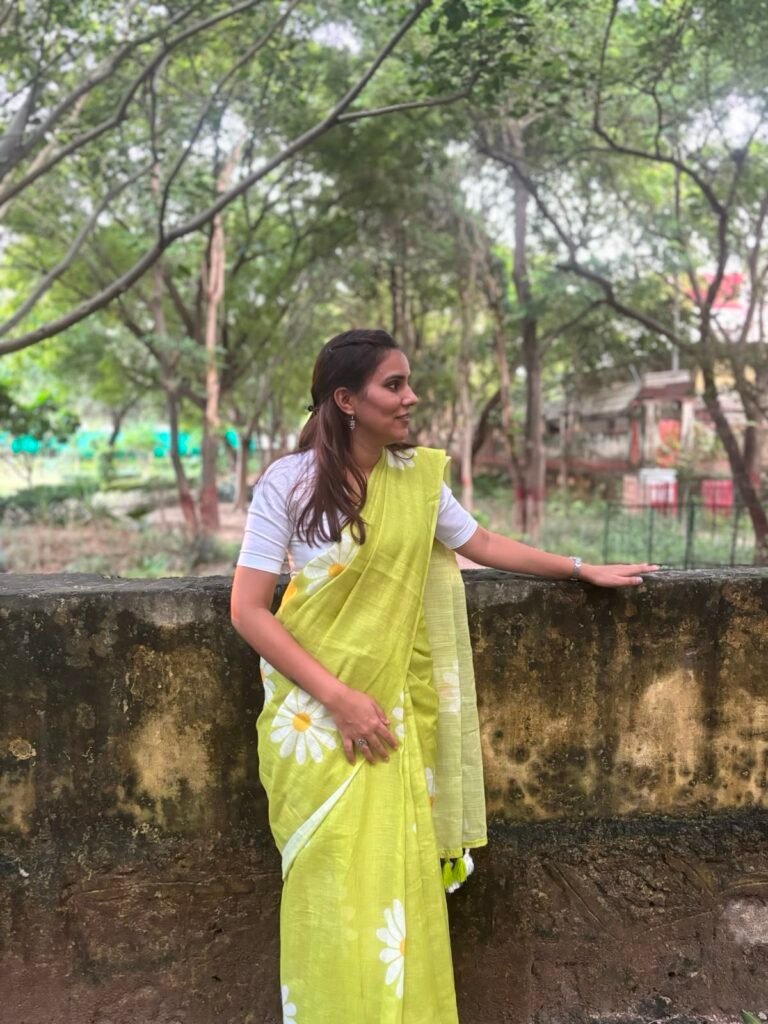
Stop Comparing the Middle of Your Story to Someone Else’s Highlight Reel
If someone early in their career feels lost because their path does not look linear enough, what would you want to tell them?
Stop comparing the middle of your story to someone else’s highlight reel.
Most careers look linear only in hindsight. When you are living through them, they feel messy, uncertain, and confusing. The people you admire probably had doubts, wrong turns, and moments when they questioned everything too.
Her own journey has included dreams of becoming an IAS officer, a painful failure, a management degree, corporate strategy roles, a poetry book, mentoring students, and now motherhood. None of those pieces seemed connected when she was living them. Today, she can see that each chapter taught her something she needed for the next one.
So instead of obsessing over having the perfect plan, focus on building useful skills, staying curious, and saying yes to experiences that help you grow. You do not need to see the entire path to take the next meaningful step. Sometimes the detours become the most important part of the journey.
“You don’t need to see the entire path to take the next meaningful step. Sometimes the detours become the most important part of the journey.”
She is not saying this from a place of having it all figured out. She is saying it from inside a life that still looks, to anyone watching, like it is mid-story. Which is what makes it land.
A Note From Decoding Draupadi
What stayed with us is that she published a poetry book and mentioned it almost in passing, the way you mention something that has always just been part of you. Not as a pivot or a side hustle or a personal brand move. Just as the way she has always understood herself, long before she could say it out loud in a meeting room.
There is a version of Ritesh’s story that gets told as ambition and achievement: Gold Medal, management degree, strategy roles, DTDC. That version is true. But it misses the part where she failed something that mattered, sat with it, wrote through it, and came out the other side with a clearer sense of who she actually was.
That is the version worth reading.
If this felt like someone you know, share it with her.
Stop comparing the middle of your story to someone else’s highlight reel. She is still mid-story herself. That is exactly why it lands. Find the conversation at @decodingdraupadi.
Ritesh Kumari is Senior Project Manager at DTDC Express. This interview was conducted as part of the Decoding Draupadi Brand Manager Series.