

A conversation with Pranavi Chhikniwala, marketer, solo traveller, and someone who quit her first job with 20K in savings and never looked back.
Pranavi Chhikniwala will tell you she is a traveller, reader, and writer, in that order. Marketing comes after.
She leads Marketing at Zostel, one of India’s most beloved travel brands. She manages a team of 17. She takes 45-day solo international trips while being married. She reads cosmology in her spare time.
She is also 30 years old, and an hour before this interview, her mother read her a letter she had written in 2015. Most of what she said then is still true today.
That is the kind of person Pranavi is. Someone who has been consistently herself for long enough that the evidence is on paper.
ON WHO SHE ACTUALLY IS
Who is Pranavi right now, across all the different lives you are living?
This is a tough one, even when I never think of myself as my job title. What I do most of the time is guide others on how to be better at what they do, and in the little remaining time I get, I try to read up on cosmology and a lot of historical fiction.
I am a traveller, reader, and writer, in that order. Everything else is just stuff I have to do.
I am married and yet I take 45-day long international solo trips. I am a marketer and yet most days I struggle keeping up with the world and all that goes on. I have a fast, supremely moving life, and while most days I love it, some days I just feel lost. And that is okay. No one has it all figured out, I remind myself many days.
“Everything else is just stuff I have to do.”
This is one of the most clarifying answers we have heard in this series. Not because it is dramatic, but because it is so settled. Pranavi is not figuring out who she is around her job. She already knows. The job is part of the picture, not the frame. We think a lot of women reading this will feel something shift when they read that line.
ON BUILDING A BRAND PEOPLE ACTUALLY BELONG TO
What does it mean to create a brand that people feel a part of, rather than just engage with?
If you approach any work with honesty, it should most likely lead to relatability among your audience. People feel like a part of something when they can relate to it, and relatability comes with transparency in a brand’s communication. It helps that we have built a team of passionate travellers at Zostel, because then marketing is ultimately about talking to yourself and people like you.
A big reason why people feel so passionately about Zostel is that they created some precious memories while travelling, meeting a stranger, chilling with people at a property. Brands like Coca-Cola or Colgate do not have that privilege. When a brand has made such a huge impact on someone’s life, they will resonate with it at a deeper level. I always say I am extremely lucky to work in travel.
The Coca-Cola and Colgate comparison is doing a lot of work here. Most brand managers would list strategies. Pranavi identifies the actual advantage: the product made a memory. You cannot engineer that. You can only show up honestly enough that people bring it to the product themselves. That is a very specific kind of luck, and she knows it.
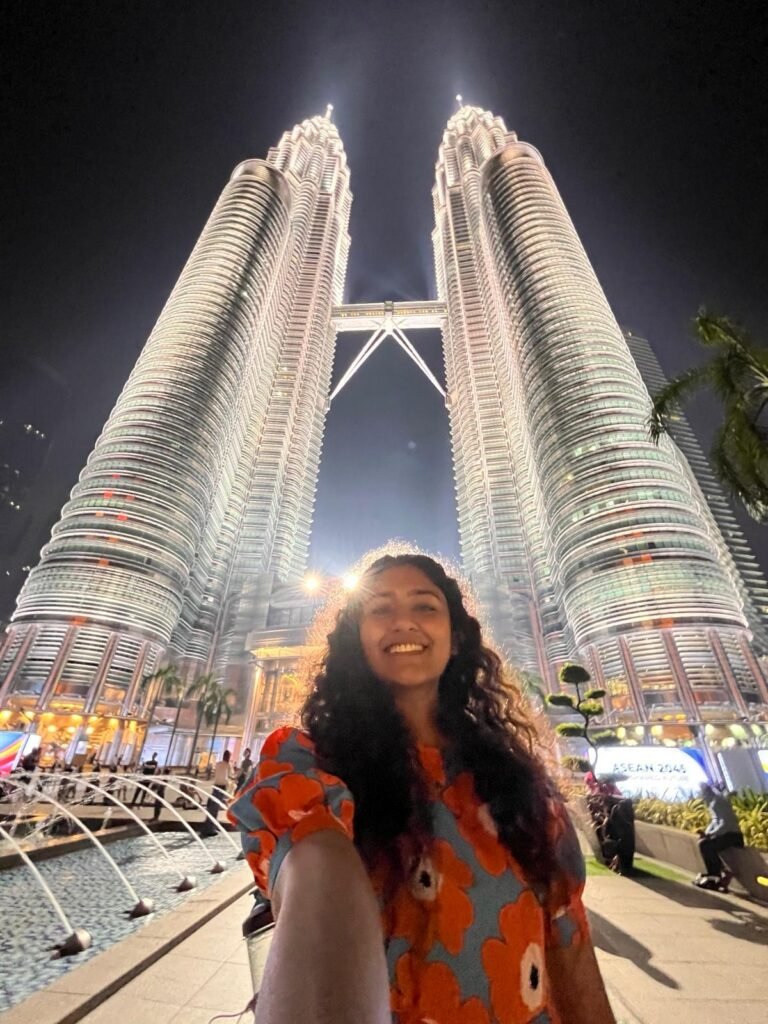
ON WHAT KEEPS PEOPLE CONNECTED
What have you learned about what makes people stay connected to a brand over time, especially in travel?
Unlike brands like Swiggy that thrive on mass relatability and humour, Zostel has to heavily rely on information. We constantly ship DIY road trip itineraries, exhaustive city guides, and so on. Accurate information is rare in travel as an industry, so that helps us a great deal. Information also translates as encouragement at times, enabling our audiences to take that trip, go see that mountain, go learn surfing.
In larger terms, people stay with your brand when they find a connection with it over a span of years. When Zostel began, we were mostly resonating with 18 to 25 year olds who were hardcore travellers. Today, the original Zosteler has graduated. Most of them are in their 30s now. So while they may not prefer staying in a dorm room, we now have villas and luxury hotels they can experience, with the same Zostel spirit.
On the marketing front, people stay connected to a brand for as long as they can relate, resonate, and be proud of being associated with it. Which is why it is so important for brands to have a soul, a voice. It ultimately leads to a deeper connection, a community.
“People stay connected to a brand for as long as they can relate, resonate, and be proud of being associated with it.”
The point about growing with your audience is something most brand managers talk about in theory. Pranavi is describing it as something Zostel actually had to do, evolve the product so the people who loved it at 22 could still love it at 32. That is not a campaign. That is a long-term relationship. And it requires the brand to take the audience seriously enough to follow where they go.
ON MARKETING BEYOND CAMPAIGNS
How has working in travel changed the way you think about marketing beyond ads or campaigns?
In the Indian travel industry, demand is far more overwhelming than the supply we currently have. So as long as you are able to understand what the user wants, shape it into a worthwhile product, and sell it, you are likely to succeed.
For us, the biggest problem has never been gaining the audience’s interest. We are pioneers of the industry, so we already have people’s interest, trust, and attention. What we do right is deliver on their expectations, day in and day out. Sometimes we fail, and when we do, we are quick to own up to our mistakes and learn from them.
Most marketing conversations start at awareness. Pranavi’s starts at delivery. When the audience is already there, the real job is not to get their attention but to keep their trust. That is a harder problem, and a more honest one. It is also the kind of thinking that comes from actually being inside the product, not just talking about it.

ON THE THANKLESS JOB OF BEING A MANAGER
How much emotional labour does your work or life demand from you? And how do you protect yourself, if at all?
I lead a team of 17 creative people, most of whom I directly manage. Most of them are below 30, and I am 30. I have an inside joke with my friends: being a manager is a thankless job.
It is true. No matter how good you do, how kind you are, how understanding you try to be, you will always fail with someone. Your team will always see you as a boss. You will always be at the helm of their complaints and expectations. I came to terms with this within the first few months of learning leadership.
I do what I have to do as a manager. But I also do what I have to do as a human being, which is be kind and understanding as much as possible, and hope with fingers crossed that my team sees the hard work that goes into that. I have had a toxic boss in the past, so I try really, really hard not to be one.
But I do not have to do much to protect myself. Work is work. It is not your whole life. A bad day at work does not have to translate to a bad day at home.
“Being a manager is a thankless job. And I try really, really hard not to be a toxic one.”
The gap between those two sentences is where all the emotional labour lives. She knows what it costs. She does it anyway. And she keeps it separate from the rest of her life with a clarity that is harder to maintain than it sounds. We hear a lot of women in leadership describe this as a drain with no solution. Pranavi’s answer is quieter: it is the job, and the job is not your whole life. That is a boundary, not a dismissal.
ON NEVER BUYING INTO THE PRESSURE
As you grow, what is something you hope never changes about you?
An hour ago, my mother read a letter to me. I had written it to her in 2015. Most of what I had said then is true about me today.
I have never bought into the pressure of earning money, having a job, or succeeding in the traditional terms. I did not chase my current role. It all worked out somehow, and I was an honest, hardworking individual through it, but I always prioritised travel, friendships, family, and things I love over my career.
A lot of times, we stall something we have always wanted to do because it would come at the compromise of our income or comfort zone. While some reasons are genuine, a lot of times we are also just bullshitting ourselves. I quit my first job and started travelling with 20K as my life savings and it turned out just fine.
I hope I always prioritise my life over any job I have. I encourage younger people to chase experiences, passions, and adventure, and see their job as one part of their whole, thriving, pulsating lives.
“I quit my first job and started travelling with 20K as my life savings and it turned out just fine.”
The letter detail at the start of this answer stopped us. Because what she is saying is not just that she has stayed consistent. She has proof. Written, dated, read aloud by her mother, proof that the person she is now is the person she always intended to be. That is rare. And it does not happen by accident. It happens when you keep choosing yourself, even when the choice looks reckless from the outside.
ON EXERCISING YOUR PRIVILEGE
What would you want someone just beginning their journey to worry less about?
I request anyone who has the privilege of choosing what they do and do not do in life, to please exercise that privilege. If you do not have to fend for your family or pay a massive loan, just focus on living your life. Work on things that bring you fulfilment and some money. They could be two different jobs. Meet more people, travel, and make your life more than a 10 to 6 and a paycheck.
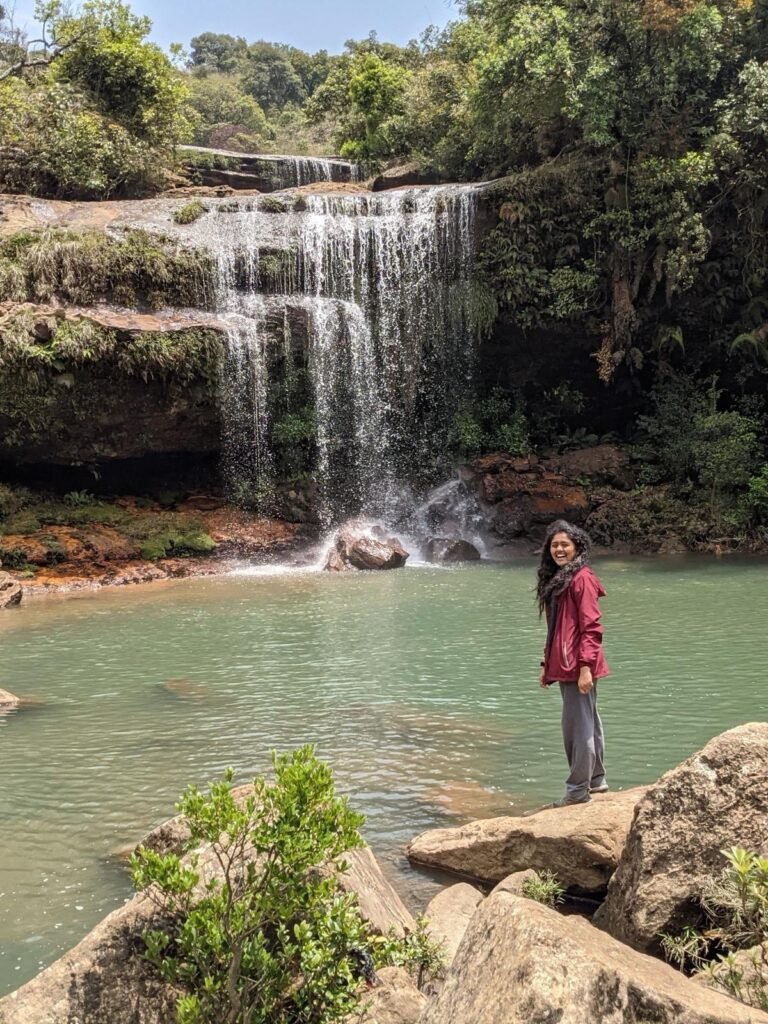
The very first job I had, I quit it in 6 months because of toxic agency culture. My plan was to volunteer at a hostel in Leh. It was a one-month opportunity with no plans thereafter, and I was 22. Back then, many of my peers thought it was stupid of me. Who quits the safety net of a job for a month’s stay and food in the mountains?
But it was that very trip that ultimately led me to my job at Zostel. Life works in wonderful ways, at least it did for me. You will not know unless you try. And please remember at all times: stepping out of your home, your comfort zone, societal traditions, your idea of normalcy, is always a good idea.
“Stepping out is always a good idea.”
She prefaces this with privilege, and that matters. She is not telling everyone to quit their jobs and go to the mountains. She is speaking to the ones who can but are convincing themselves they cannot. That is a specific and important distinction. The Leh story is the kind of thing that sounds like a risk in the telling and like an obvious decision in the living. Most of the women in our community are standing exactly where Pranavi was at 22. We hope this lands.
A Note From Decoding Draupadi
What stayed with us is the letter. Written at 22, read back by her mother at 30, still true. Most of us are still waiting to become who we want to be. Pranavi has proof she already is. That is what this series is for. Not the highlight reel. The real version, the one you could have written at 22 and still stand behind today. If this felt like someone you know, share it with her.
— End of Interview —
Pranavi Chhikniwala is a content and community marketer at Zostel. This interview was conducted as part of the Decoding Draupadi Brand Manager Series.
Read it. Felt it. Share it with the woman in your life who needs to hear this. Then come find us at @decodingdraupadi.