

A conversation with Ajita Swaroop, Marketing Head at a commerce technology company, on ecosystems built on trust, campaigns that stay in memory rather than trending for 48 hours, and the long project of becoming someone worth watching.
Ajita Swaroop has spent her career thinking about the sides of a marketplace that don’t shout. The mid-tier seller nobody designed for. The campaign that reached 50,000 people and changed how they felt about a brand forever. The work that doesn’t show well in a weekly review but actually does the job.
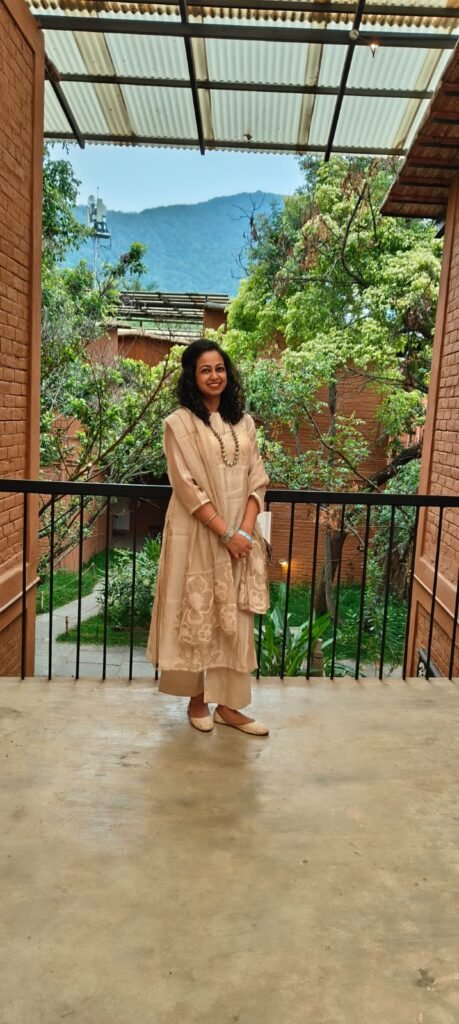
She writes Hindi poetry, retells Indian mythology, and is working on a book about motherhood. She is also, by her own description, in the Excavation phase. This conversation shows you exactly what that looks like from the inside.
The Poet Brain and the Marketing Brain Are Often in Conflict
Who is Ajita right now, across the different lives she is living?
Honestly? Ajita is a work in progress, and for the first time, she’s completely okay with that.
At work, I’m the Marketing Head at a commerce technology company, building something from scratch in the B2B SaaS space, which is a completely different muscle from the consumer brand world I spent most of my career in. There’s a lot of figuring-out-loud happening there, and I’ve learned to be comfortable being the person in the room who says I don’t know this yet, but I’ll find out.
At home, I’m a mother to a toddler, which means I am simultaneously the most important person in someone’s universe and also the villain who said no to a third cookie. It’s a strange, beautiful, exhausting kind of power. I’m working on a book about motherhood, and the core idea is genuinely the truest thing I’ve ever articulated: that I am growing alongside my child. Not ahead of her. Alongside.
Outside of these two identities, there’s a version of Ajita who writes Hindi poetry, who is obsessed with mythology, who paints when she can steal the time. That version feels most like me, the one who existed before job titles and responsibilities. I’m trying to keep her alive, not as a hobby, but as a necessity.
These lives don’t always coexist comfortably. The marketing brain and the poet brain are often in conflict. The mother and the professional are constantly negotiating. But I’ve stopped trying to make them all fit neatly. They’re all real. They’re all mine.
“I am growing alongside my child. Not ahead of her. Alongside.”
That reframe is worth pausing on. Most parenting narratives position the parent as the guide, the one who has already figured it out and is now transmitting. Ajita is saying something different: that the child is not a destination she is shepherding someone toward, but a co-traveller in the same uncharted territory. That is not a small shift in how to think about growth.

The Person You Forget to Design For
What has building and scaling platforms where brands, sellers, and consumers all interact taught you about what it really takes to build ecosystems that work for everyone?
The big lesson? You cannot build an ecosystem by optimizing for one side of it and hoping the other side will be grateful.
I’ve worked on platforms where sellers, buyers, and the brand itself each had completely different incentives, and the temptation is always to prioritize whoever screams loudest or drives the most visible metric. But the platforms that actually worked were the ones where value flowed in all directions. Not equally all the time, but consistently enough that every participant felt like the platform was on their side.
In one of my previous roles, the biggest shift in seller marketing wasn’t a campaign or a sale. It was when we started treating sellers not just as suppliers but as a community with their own aspirations and anxieties. When we ran events, created content, built training programs, not to extract something from them, but to genuinely help them grow, the business metrics followed. Trust always precedes transaction.
The other thing I’ve learned is that the person you forget to design for will eventually become your biggest problem. In seller ecosystems, it was never the top 1% of power sellers who needed the most attention; they were already winning. It was the mid-tier seller, the one doing decent volume, trying to figure out why her listings weren’t converting, who needed us most. She wasn’t loud enough to raise a ticket, wasn’t big enough to get a dedicated account manager. But she was everywhere. When we started designing for her, the training, the content, the events, everything moved. Because she was the majority, not the exception.
“Trust always precedes transaction.”
That mid-tier seller portrait is one of the sharpest pieces of strategic thinking in this series. She is describing a person who is invisible to most dashboards and yet entirely representative of the actual market. Building for the edges, the loudest or the largest, is an easy mistake. Finding the majority who is too quiet to complain takes a different kind of attention. Ajita has clearly spent years developing exactly that.
We’ve Confused Volume for Resonance
What is a widely held belief in your industry that you quietly disagree with?
That reach is proof of relevance.
There’s an obsession in marketing, especially in the digital-first era, with numbers that sound impressive. Impressions. Eyeballs. Reach. And don’t get me wrong, those numbers matter. But I’ve seen campaigns that touched 200 million people and moved nothing, and I’ve seen a small, honest piece of content that reached 50,000 people and changed how they felt about a brand forever.
We’ve confused volume for resonance. A campaign that trends for 48 hours is not the same as a campaign that stays in someone’s memory for a year. We chase the former because it’s measurable and it shows well in presentations. The latter is harder to justify in a weekly review, but it’s the one that actually does the work.
What I wish more marketers would ask is not how many people saw this, but how many people felt something because of this. That’s a harder question. But it’s the right one.
“We’ve confused volume for resonance. A campaign that trends for 48 hours is not the same as a campaign that stays in someone’s memory for a year.”
The 200 million versus 50,000 example is doing what good marketing arguments rarely do: it is specific enough to be falsifiable and honest enough to be uncomfortable. She is not saying reach doesn’t matter. She is saying reach without felt meaning is noise, and we have built entire measurement systems around that noise because it is easier to count. That is a real critique of how the industry justifies its own work.

The Excavation Phase
If you had to describe where you personally are in your own arc right now, what phase would you call it and what is driving it?
I’d call it the Excavation phase.
Not rebuilding. Not reinventing. Excavating. Like I’m digging into layers I hadn’t examined before and finding things I’d buried, instincts I’d second-guessed, perspectives I’d softened to fit rooms that weren’t ready for them, parts of myself I’d kept for later.
Professionally, I’m doing work that is genuinely new to me: B2B, enterprise, global markets. It’s humbling in the best possible way. I’m not the expert in the room anymore, and that’s teaching me how to think again, not just execute.
Personally, becoming a mother has excavated something very old and very raw in me. It’s cracked me open in ways that nothing else has. The book I’m working on is part of that, a way of making sense of the chaos, laughing at it, and realizing that growth doesn’t always look like progress. Sometimes it looks like sitting on the floor at 2 a.m. with a sick child and feeling completely unqualified and completely in love simultaneously.
What’s driving this phase is a deep tiredness with performance: performing confidence, performing certainty, performing I’ve got it together. I’m more interested in what’s actually true now. Even when the truth is messier.
“Growth doesn’t always look like progress. Sometimes it looks like sitting on the floor at 2 a.m. with a sick child and feeling completely unqualified and completely in love simultaneously.”
Excavation is a better word than the ones most people reach for. Reinvention implies you are building something new. Rebuilding implies something broke. Excavation implies the thing was always there, waiting under everything else you buried it beneath. The distinction matters, and only someone who is actually in it would think to make it.
The Most Interesting Work Doesn’t Have a Job Description Yet
There is usually one decision in your career that looked wrong from the outside and turned out to be exactly right. What was it?
Moving from HSBC, a prestigious, stable corporate role, to Seller Marketing at a large marketplace.
At the time, it looked like a lateral move at best, and to some people, a step sideways in a career that had been moving upward. I was going from a well-defined brand role at a global bank to what was, essentially, a startup charter within a marketplace. Nobody really understood seller marketing as a serious discipline yet.
But it turned out to be the most formative years of my career. I got to build things that didn’t exist: create the first industry-scale seller events, launch brand films that trended, lead a social impact program called Project Samarth that I still feel proud of in a way that no quarterly number has ever made me feel. I learned what it meant to be a builder, not just a manager.
The lesson was something I now believe completely: the most interesting work often lives in the spaces that don’t have a proper job description yet. If a role is well-defined, well-understood, and well-precedented, someone has already figured it out. The uncharted stuff, that’s where you actually grow.
“The most interesting work often lives in the spaces that don’t have a proper job description yet.”
Project Samarth is the detail that stays. She says no quarterly number has ever made her feel what that program did, and she says it plainly, without qualifying it. That is a specific and unusual thing to admit in a career conversation, because it is the kind of thing that is hard to put in a performance review. But it is clearly the truest measure she has.

The Longest Project, With No Deadline and No Metrics
Outside of your job title and your company, what are you building?
A few things, honestly.
The most visible one right now is a book on motherhood that I’m working on. It’s not the kind of book that tells you what to do. It’s the kind that says yes, this is hard, and also, it’s kind of hilarious, and you’re going to be okay. I started writing it because I was looking for that book and couldn’t find it. So I decided to make it. That’s probably my most honest creative act to date.
I’m also tending to a long body of writing around mythology, specifically retelling and reinterpreting stories from Indian mythology through a modern lens. That writing has lived on my blog and Facebook page for years now, and it has found its own quiet, loyal following over time. Mythology is where I go when I want to think about the big questions: about dharma, about identity, about what it means to choose when every choice has a cost.
And honestly? I’m building a version of myself that I want my daughter to see. That’s the longest project. The one with no deadline, no metrics, no campaign manager. Just daily decisions about who to be when it’s hard to be anyone at all.
“I’m building a version of myself that I want my daughter to see. That’s the longest project. The one with no deadline, no metrics, no campaign manager.”
She started writing the motherhood book because she couldn’t find the one she needed. That is how a lot of the most honest creative work begins, not from ambition but from a gap nobody else has filled. The mythology writing finding its own quiet, loyal following over time without pressure to post regularly is a different kind of proof of concept than any campaign metric. It is the resonance argument she made in Q3, lived out in her own work.
I Didn’t Let the Urgent Eat the Meaningful
Five years from now, you are having a real conversation with someone you respect. What do you hope you are able to say about this period of your life?
That I didn’t play it safe when it mattered.
Not reckless; I’m not romanticizing chaos. But there have been moments in this period where I’ve had to choose between the comfortable answer and the honest one, between the expected move and the right one. I hope I’ll be able to say I chose well, more often than not.
I also hope I’ll be able to say that I built something with people, not just through them. That the teams I worked with felt genuinely seen and genuinely invested in. That’s the kind of leader I’m trying to become: one who gives people enough room and enough trust to do their best work, and then gets out of the way.
And personally, I hope I’ll be able to say that I kept writing. That I didn’t let the urgent eat the meaningful. That my daughter grew up watching her mother do something just because it mattered to her, not because it was profitable or impressive. That might be the most important thing of all.
“I didn’t let the urgent eat the meaningful.”
That last ambition is the one that underpins everything else she has said. Not the ecosystem thinking, not the resonance over reach argument, not even the book. The image of her daughter watching her do something because it mattered, not because it was impressive or profitable, is where all of it points. She is building for an audience of one, and that audience has no interest in her quarterly metrics.
A Note From Decoding Draupadi
What stayed with us from this conversation is the mid-tier seller. That woman who was doing decent volume, couldn’t figure out why her listings weren’t converting, wasn’t loud enough to raise a ticket, wasn’t big enough to get a dedicated account manager. Ajita designed for her. And everything moved.
We think about that woman a lot. She is in every industry, every platform, every community. She is the majority. She is the one doing the work quietly, without the infrastructure, without anyone checking in. She is, in many ways, the exact woman this series is for.
Ajita saw her. Built for her. And had the clarity to name why that mattered.
If this felt like someone you know, share it with her.
— End of Interview —
Ajita Swaroop is the Marketing Head at Flipkart. This interview was conducted as part of the Decoding Draupadi Brand Manager Series.
She started writing the book she needed and couldn’t find. That’s probably her most honest creative act to date. On building what doesn’t exist yet, at @decodingdraupadi.