
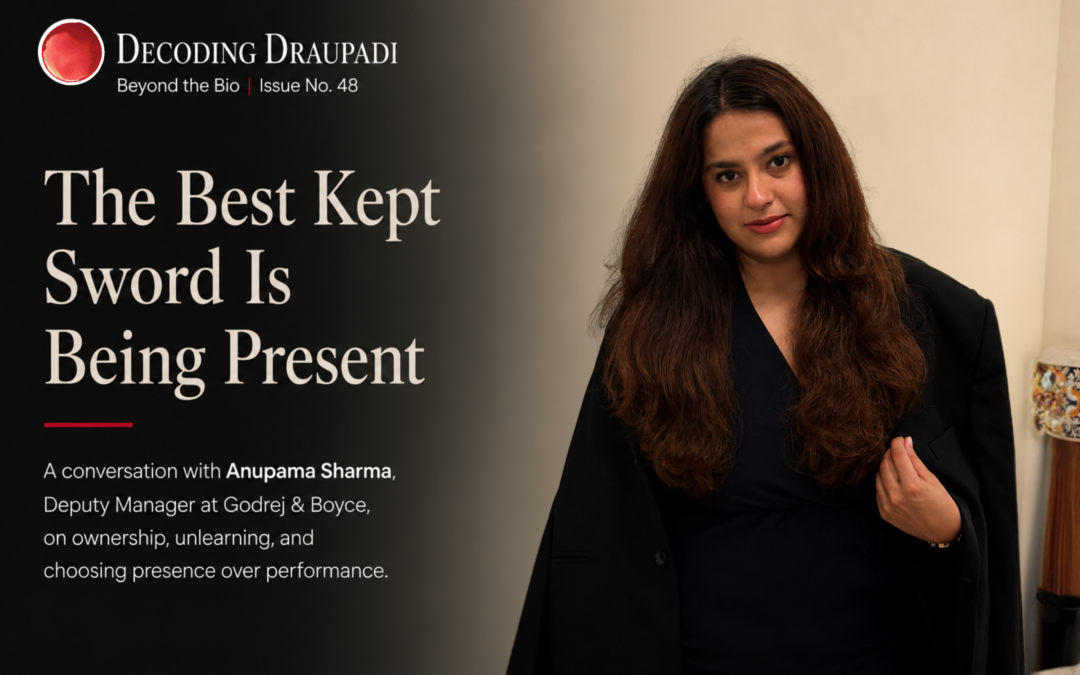
A conversation with Anupama Sharma, Deputy Manager at Godrej & Boyce, on ownership, unlearning, and choosing presence over performance.
Anupama has moved through copywriting, agency life, client servicing, and brand management before landing in an in-house leadership role at Godrej & Boyce. Somewhere in that shuffle of titles, she picked up a habit most of us are still trying to learn: staying exactly where her feet are.
This is a conversation about ownership as a form of presence, about slowing down without apologising for it, and about why the loudest compliments are often the hardest to believe.
Being Present Is a Conscious Effort, Not a Given
Who is Anupama right now, across the different lives she’s living?
The awareness of who am I right now, I’m present. That itself is a learning. When I’m with Rishika, I am here at present. When I’m at work, I am that person. And when I’m with my family or friends, I’m that.
I think one thing we have to constantly unlearn through this entire journey is that we have to be so present, right, with our work, with everything. I don’t think I was present when we started our careers, because you’re constantly stimulated. Today, who am I right now? I’m just currently at this moment. And that has taken a lot of unlearning. A lot of going back and forth, a lot of realisation, and then just saying, you know what, everything has been a byproduct of what I am today.
In the constant juggling of being, of having such multiple, diverse roles, and specifically as women, we’re constantly in the eyesight of the world. So I think the best kept sword is being present.
“I think the best kept sword is being present.”
What gets me about this answer is that Anupama doesn’t describe presence as calm. She describes it as effort, something you have to keep choosing, especially when the world is watching women’s lives more closely than it watches anyone else’s. That reframes presence as armour, not aesthetic.
Ownership Is an Underestimated Quality
Looking back across copywriting, agency life, and now in-house leadership, what part of your work has stayed constant even as your titles changed?
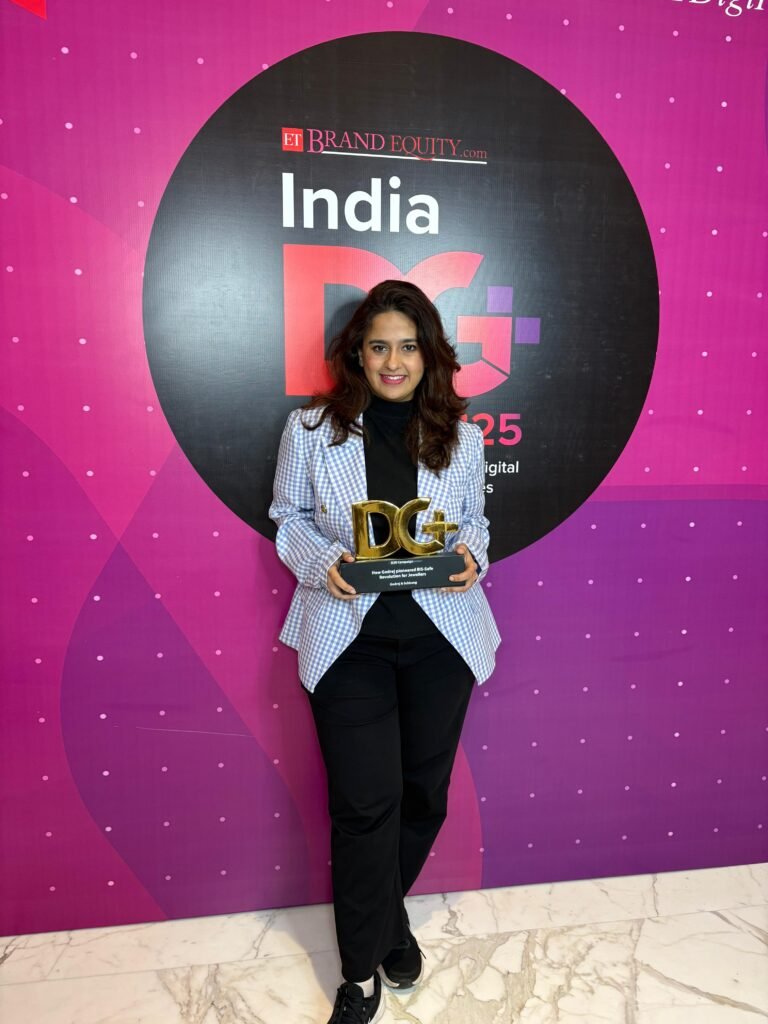
Ownership. That’s something that has stayed with me through and through. Because if I have given my word, I have to live up to that. I think ownership is such an underestimated quality to have. A lot of people take it as, why do I need to do this, it’s not my company. But to take that ownership, I think it’s not selfish. It speaks a lot about your professional character. If I have taken on work and given my word, to be able to complete it and sit with my word, ownership has always been the constant.
“If I have given my word, I have to live up to that.”
Ownership and presence keep circling back to each other in this conversation. You cannot be present without ownership, and you cannot own your word without staying present to it. It’s a small, sharp thread running under everything Anupama says.
An Agency Brief Is Only Half the Chunk
What’s one mindset you had to consciously unlearn moving from agency life into an in-house role?
When you’re in agency, it’s a brief versus your output, whatever has reached you. But from a leadership role, on the client or brand side, you realise the why. Agency will just say, this is the brief, this is the campaign, this is the launch. But why am I launching it, the ROIs, the KPIs, the analytical part, that’s what I had to unlearn.
You give the most larger-than-life idea thinking it’ll be approved. But there are so many things attached to it, your budget, your permissions, whether it’s really reaching your target audience. In a leadership role, you take ten steps back and think, okay, this is a business, and the campaign is only half the chunk of it. In an agency, it’s like, this is my entire chunk. There is a lot more to business than just creativity.
“There is a lot more to business than just creativity.”
This is the unlearning nobody warns you about when you move client side. The work doesn’t get smaller, your view of it gets bigger, and that shift can feel disorienting before it feels useful.

Asking for Leave Used to Feel Like a Confession
What’s something you’ve stopped apologising for as you’ve grown in your career?
As soon as I read the question, I thought, it’s such a small thing. What I felt guilty for in agency life was asking for a leave. As sad as it sounds, it is so rewarding to come out of that and say, you know what, I’m not feeling good, I want to take a leave, and I genuinely need this.
Apology comes so naturally to a woman, like, let me just say sorry, or feel guilty for actually resting. But today I don’t think I’m apologetic. And thanks to the awareness on social media too, because that’s empowering. You’re doom scrolling and seeing five or six people across the board either taking a sabbatical, or slowly getting back to nature, and not being guilty about it. That’s the power of social media, that you’re connecting to people you relate to, and you realise, oh wait, probably even I can. The world will not end.
“The world will not end.”
There’s something quietly radical about naming rest as unremarkable rather than earned. Anupama isn’t asking for permission to slow down here, she’s describing what it took to stop needing it.
The Compliment You Can’t Quite Accept
What’s a compliment people give you that you secretly struggle to believe about yourself?
Everybody, I’m sure, goes through imposter syndrome, because even once you’ve achieved so much, we’ve kept the pedestal so high that once we reach it, we still think we’re not enough. The constant compliment goes back to ownership. There have been times my seniors have just left something to me and said, I’m sure you’ll be able to handle it. That leads to two things. First, you’re constantly stimulated because you don’t want to let them down, let alone yourself. Second, you sort of owe so much to that person’s belief in you, you think, I can’t make a mistake, because you’re living up to an expectation which is not even yours.
But you miss actually celebrating your own self in that rut.
“You miss actually celebrating your own self in that rut.”
This one lands because it names the cost of high expectations honestly, without dressing it up as gratitude. Living up to someone else’s belief in you is still a kind of pressure, even when it’s kindly meant.
Slowing Down Shows You What You Almost Missed
Has there been a season in your life where slowing down taught you more than constantly pushing ahead?
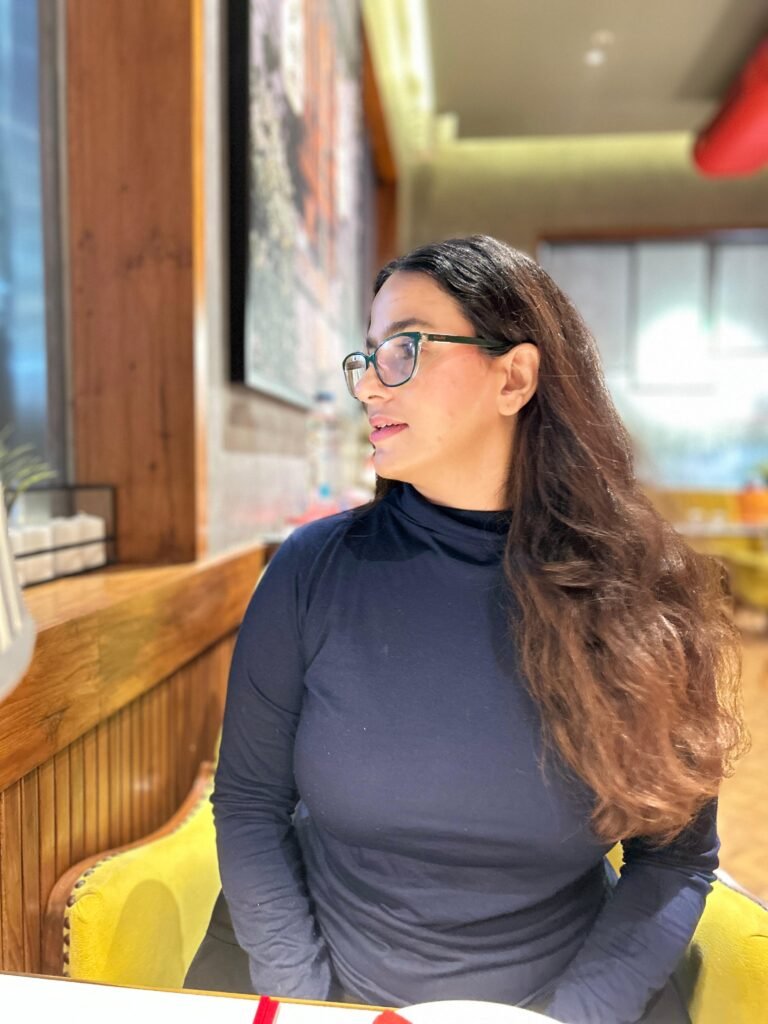
Constantly slowing down is so underestimated. A lot of people ill-treat it, and that’s precisely why anyone who wants to slow down gets held up as an example of someone who isn’t serious, or who’s quitting. But slowing down is so important, because you realise you’ve spent so many hours, missed so many anniversaries, missed birthdays you had to be there for. Your friends tell you, we’re celebrating this, but I’m sure you won’t be able to make it. That’s disappointing, because you’re living up to some expectation. And when you slow down and show up, you realise how much you’ve missed, and those times are never coming back. You’re never going to turn 23 or 21 again.
Nobody actually held a gun to your head and said don’t attend your friend’s wedding. You took that on yourself. That’s what slowing down does, it shows you that.
“You’re never going to turn 23 or 21 again.”
The detail that stays with me here is how Anupama separates external pressure from self-imposed pressure. Nobody forced the missed birthdays. That’s a harder thing to sit with than blaming the job.
Success Is Slow Progress, Not a Number
If success stopped being measured by promotions, titles, or outcomes, what would you measure your life by instead?
Success is so subjective. We’ve put this word on such a high pedestal. But it’s measured by everything amalgamated together, the time you spend with your loved ones, the time you spend on yourself. I’d measure success as being able to be happy, not with the best campaign on earth, but to have that pride factor in my own loved ones’ eyes, and to be able to look in the mirror and say, work is not everything.
To not measure yourself year on year by a number, because that makes us so inhuman. All this while I was thinking numbers and designations were success, but it’s being able to enjoy the designation, to spend time with your loved ones, on yourself, to have a decision of your own and say, this campaign can wait. I think that slow progress is success. I’m not in a constant rut to reach some finish line. That’s success for me.
“I think that slow progress is success.”
It’s fitting that the interview ends here, because this is the same idea Anupama opened with, just turned inside out. Presence was the practice. Slow progress is what it adds up to.
A Note From Decoding Draupadi
What stayed with us from this conversation is a single line: specifically as women, we’re constantly in the eyesight of the world. Anupama doesn’t treat presence as a soft skill, she treats it as the one thing that lets her stay whole across every version of herself that gets watched, judged, and expected to perform. That’s not a small thing to build a career on. If this felt like someone you know, share it with her.
If this felt like someone you know, share it with her.
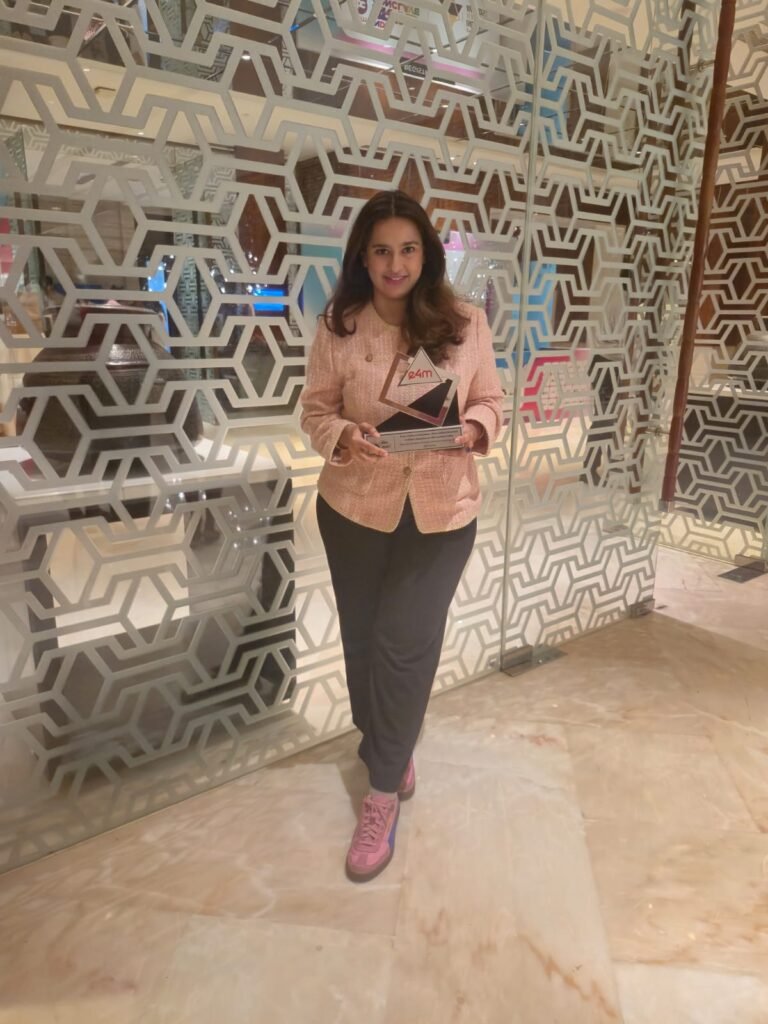
Anupama Sharma is a Deputy Manager at Godrej & Boyce Mfg. Co. Ltd.. This interview was conducted as part of the Decoding Draupadi Brand Manager Series.
Ownership looks different at every stage of a career. What does it look like at yours?
Follow more of the series on @decodingdraupadi.