

A conversation with Jyoti, brand and growth strategist, and someone building resilience from the inside out.
Jyoti has a very clear point of view about what women actually want from brands.
Not aspiration. Not the polished version of a life slightly out of reach. Recognition. The feeling of seeing yourself in what a brand puts out, without being edited into something easier to sell.
She arrived at this not through a framework but through actual conversations with customers, reading what they wrote in DMs and communities, listening to what they kept coming back to.
The same principle runs through her personal life too. She is not trying to build a polished version of herself. She is trying to build one that actually lasts.
THE MANY JYOTIS
Who is Jyoti right now, across all the different lives you are living?
Right now, I think I exist as slightly different versions of myself across spaces, and I have made peace with that.
At work, I am someone who is dependable and easy to work with. I like being the person people can rely on: someone who gets things done, keeps the energy light, and shows up for the team without overcomplicating things.
At home, I enjoy being present but I also really protect my alone time.
With my best friend, I cannot stop talking. We can spend hours discussing everything.
And then there is a more private version of me that shows up in my hobbies and personal interests. That version is a lot more particular, more disciplined, and deeply invested. I tend to go all in on things that matter to me, even if most people do not immediately see that side.
What ties all these versions together is that I am still figuring out how to balance emotional presence with personal space. How much of myself to give, and where. Some days it feels aligned, some days it does not. But that is where I am right now.
The word she uses is made peace with. Not solved, not figured out. Just made peace with the fact that different spaces get different versions of her. That is not a contradiction. That is just how people actually work. And it takes a specific kind of self-awareness to name it that clearly.
FAMILIARITY BEATS ASPIRATION EVERY TIME
What has your shift from content and community to brand growth taught you about what actually builds trust with consumers?
What this shift has really taught me is that trust is not built through spikes in engagement. It is built through consistency in how you show up.
I have seen this closely while working with a brand over a long period of time. The reason people kept coming back was not because we were the loudest or the most aspirational. It was because we felt familiar and real to them. We showed real women, real experiences, and did not try to over-polish everything into something unattainable.
There is always a temptation in marketing to lean into aspiration, to show a version of life that feels slightly out of reach. While that can attract attention, it does not always build trust. What builds trust is recognition: when someone sees themselves in what you are putting out.
Consumers do not commit to brands because of one good campaign. They commit because the brand keeps showing up in a way that feels honest, relatable, and consistent, again and again. When that happens, engagement becomes a byproduct. Trust is what actually drives retention.
“Consumers don’t commit because of one good campaign. They commit because the brand keeps showing up honestly, again and again.”
This is one of the clearest articulations of brand loyalty we have heard in this series. Jyoti is not describing a strategy. She is describing something she watched happen in real time, and the conclusion she arrived at by paying attention. Consistency over spectacle. Recognition over aspiration. It sounds simple. It is very hard to actually execute, especially when there is pressure to do something big every quarter.
THE INDUSTRY IS STILL GETTING THIS WRONG
There is probably a widely held belief in your industry that you quietly disagree with. What is it?
A belief I have started to question is that good marketing, especially for women, has to be aspirational to work.
For the longest time, I also believed that. That you need the most polished visuals, the most conventionally good-looking influencers, the most perfect version of a life to get attention and build a brand.
But my perspective changed when I actually started speaking to customers on calls, in DMs, through communities. These were people who were following us, engaging with us, and choosing us consistently. And the one thing they kept coming back to was how real everything felt.
Not perfect. Not aspirational. Just real.
They did not connect with us because we showed them something to become. They connected because they could see themselves in what we were putting out.
I think the industry still underestimates that. We assume women want to aspire upwards all the time. But often, they just want to feel seen and understood without being edited into a version that is easier to sell.
“We assume women want to aspire upwards all the time. But often, they just want to feel seen without being edited into a version that’s easier to sell.”
This is the most important thing in the entire interview. And it lands harder because she is not theorising. She read the DMs. She took the calls. She listened to what actual women kept saying. The industry version of the modern Indian woman is an ideal. The real version is someone who is just trying to feel recognised. Those are two completely different briefs, and most brands are still writing the wrong one.

THE PROJECT UNDERNEATH THE JOB TITLE
Outside of your job title and your company, what are you building?
Outside of work, I think I am building a stronger relationship with myself: physically, mentally, and emotionally.
I have had a complicated relationship with health for a long time. I have dealt with PCOS since I was quite young, and for years wellness has become much more intentional for me.
I am trying to build a version of myself that feels stronger and more stable from the inside out. That shows up in small, everyday ways: I dance, I read, I work out, I go for walks, I sing. Not because I have to, but because I want to feel more grounded in my own body and mind.
I think I am also slowly becoming someone who wants to share that journey more openly, maybe even guide others toward it in some way. Not in a preachy sense, but from lived experience.
So if I had to put it simply: I am building resilience. And learning how to take care of myself in a way that actually lasts.
“I am building resilience. And learning how to take care of myself in a way that actually lasts.”
She names PCOS without making it the whole story. It is context, not identity. What she is describing is the longer project underneath: building a version of herself that is stable, grounded, and sustainable. Not a transformation. Not a glow-up. Just a quieter, more consistent version of showing up for yourself. We think a lot of women reading this will recognise exactly what that work feels like.
LEARNING TO SHOW UP FOR HERSELF TOO
Which relationship in your life has changed the most since you started working?
I think the relationship that has changed the most is the one I have with myself.
Work has a way of quietly taking over your time and energy. It starts with small things: late nights, irregular routines, pushing your own needs aside. And before you realise it, you are constantly stretching yourself to keep up.
I have gone through phases where I was not respecting my own boundaries. Where I would prioritise work to a point where it started affecting my health, my routines, even how present I could be in my own life.
That is something I am a lot more aware of now. I am still learning how to draw clearer lines: what I will take on, what I will not, and how to not carry work into every part of my day.
That shift, learning to show up for myself as much as I show up for work, has probably been the biggest change.
The most changed relationship being with yourself is an answer that sounds abstract until you read what she actually means. She is describing the slow erosion that happens when work consistently gets more of you than you do. And the equally slow process of reversing it. It is not dramatic. It is just the daily work of taking yourself as seriously as you take your job.
WHAT SHE DOES NOT ALLOW ANYMORE
What does rest actually look like for you right now?
Rest, for me, is less about what I do and more about what I do not allow anymore.
It is saying no without over-explaining, not carrying work into every hour of my day, and protecting small pockets of time that are just mine.
I am still learning it. But real rest has started to look like boundaries.
“Rest is less about what I do and more about what I don’t allow anymore.”
Short answer. And the most complete definition of rest we have heard in this series. It is not a spa day or a digital detox. It is a boundary. The decision not to let work fill every available space. That is harder than it sounds, and more useful than any wellness routine.
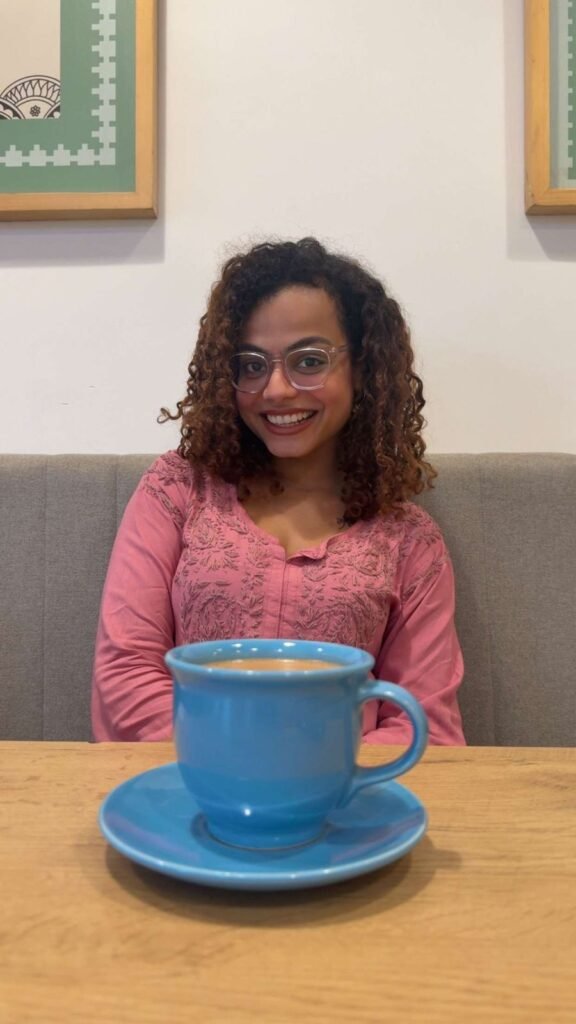
SHE IS NOT A GOAL. SHE IS A REAL PERSON.
What does the phrase ‘the modern Indian woman’ get wrong, and what would you replace it with?
I think the modern Indian woman we often see in marketing is overly aspirational. She feels more like a goal than a real person.
She is usually shown as perfectly put together, making the right choices, balancing everything effortlessly. And while that is appealing, it does not feel honest.
From what I have seen, most women are not trying to become someone else. They are trying to feel seen and understood as they are, in their real, everyday lives. We are messy and managers in our own way.
I would replace that idea with something more grounded: not an ideal to live up to, but real women as they are, unfiltered, evolving, and not always perfectly figured out.
“We are messy and managers in our own way.”
We are messy and managers in our own way is the line the entire interview has been building toward. It is the brand insight and the personal philosophy in one sentence. Jyoti is not describing a new marketing strategy. She is describing what it actually feels like to be the woman these briefs are supposedly written for. And the gap between the two is exactly where better brands get built.
A Note From Decoding Draupadi
What stayed with us after this conversation is a line Jyoti said almost in passing: we are messy and managers in our own way.
That is the brief we wish more brands would write. Not the aspirational version, not the perfectly balanced woman who has it all sorted. The actual one, who is figuring it out in real time, protecting her rest, building her resilience, and still showing up.
That is also why we built this series. Because this woman deserves to see herself reflected back honestly, not edited into something easier to sell.
If this felt like someone you know, share it with her.
— End of Interview —
Jyoti is a brand and growth strategist. This interview was conducted as part of the Decoding Draupadi Brand Manager Series.
We built this for the woman who is still figuring it out and doing brilliantly anyway. If that is you, you belong here.@decodingdraupadi.