
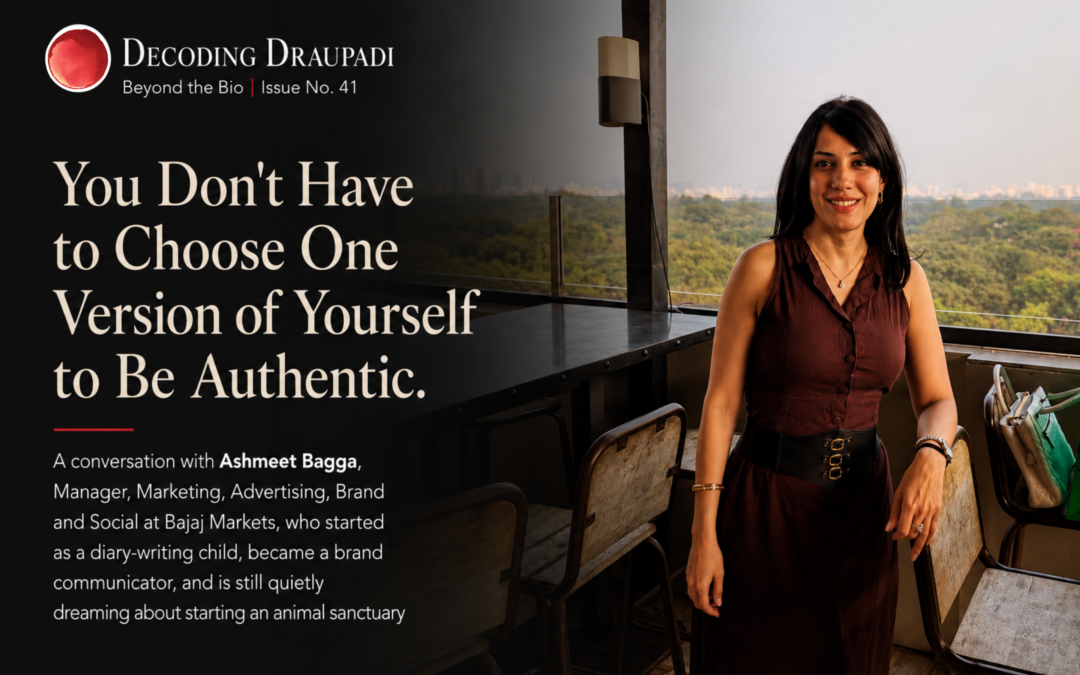
Ashmeet Bagga started writing long before it was a career, filling diaries with dramatic entries about small incidents, the kind she now cringes at when she reads them back. She has since moved through content writing, brand communication, and marketing into a role at Bajaj Markets. She is also the wife of an army officer, a dog mom, someone who will find her way to a dance floor at any provocation, and a person who is one emotional rescue video away from buying land and starting an animal sanctuary.
She does not think she is a better writer today than she was at the start. She thinks she is a better communicator. This conversation is the difference between those two things, played out across seven questions.
Five Main Characters
Who is Ashmeet right now, across the different lives you are living?
Her life currently has five main characters. The marketer. The wife of an army officer. The dog mom. The one who is always looking for a reason to dance. And the woman who is one emotional rescue video away from buying land and starting an animal sanctuary. Somehow, they all live in the same body. Some days they work together beautifully. Some days they compete for attention.
At work, she is the builder: strategy, creativity, people, the intersection of all three. She finds something deeply satisfying about turning an idea into impact and watching people connect with it. At home, being the wife of an army officer has taught her that life rarely sticks to Plan A, and that home is less about a place and more about the people, and pets, you share it with.
The dreamer is the one she does not talk about as much. She has been quietly dreaming about the same thing for years: not an Instagram-perfect farm, but a wonderfully chaotic one, filled with rescued dogs, whiskered guinea pigs, retired horses, stubborn donkeys, goats, cows with names, and probably a duck nobody remembers adopting. She wants to start an NGO for animals one day, because they have taught her the simplest thing: that love does not need words, conditions, or credentials.
A few years ago, if you had asked what success looks like, she would have said a promotion. Today it looks like a life that is as fulfilling outside work as it is within it. One where she can build brands that matter, dance without waiting for an occasion, lose herself on a mountain trail, come home to a wagging tail, and someday create a safe haven for animals who deserve a second chance.
“You don’t have to choose one version of yourself to be authentic. Sometimes, authenticity is simply making room for all of them.”
Most people answer this question by listing roles. She listed characters, which is a more honest way to describe the same thing. The marketer and the animal sanctuary dreamer are not in conflict. They are just different rooms in the same house.

Clarity Beats Cleverness Every Single Time
You began as a content writer before moving into brand communication and marketing. How has your relationship with storytelling changed? Do you think good marketing starts with great writing?
She started writing long before it became a career, as a child who wrote diaries religiously, every small incident deserving a dramatic entry. Reading them back today makes her cringe. That cringe, she says, is a good sign. It means she has evolved.
Ironically, she does not think she is a better writer today. She thinks she is a better communicator. Early on, she wrote to impress: beautiful, clever, almost literary sentences. Marketing taught her something different. Clarity beats cleverness every single time.
These days she spends less time chasing the perfect sentence and more time asking whether this will connect with someone. That is a fundamentally different way of thinking. Whether it is a CEO communication, a LinkedIn post, or an internal campaign, the job is not to show how well she can write. The job is to make sure the message lands.
She still believes good marketing starts with great writing. But great writing, in her definition, is not about big words or beautiful prose. It is about making people pause, understand, and remember.
“Great writing isn’t about big words or beautiful prose. It’s about making people pause, understand, and remember.”
The shift from writing to impress to writing to connect is one of those transitions that sounds simple and takes years. She names it precisely: it is not a loss of craft. It is a redirection of craft toward someone else rather than toward the sentence itself.
Letting Go of the Need to Control Everything
What is something you have changed your mind about in the last few years?
That she needs to be in control all the time. For a long time, she believed that if she planned enough, prepared enough, and worried enough, she would be able to handle whatever life sent her. Life kept demonstrating otherwise.
She has learned that not everything needs an immediate solution, and not every unanswered question deserves endless worrying. Some things simply unfold in their own time. She has also become kinder to herself in the process: earlier, she would frequently question whether she deserved an opportunity or was good enough for it. Now she reminds herself that self-doubt is a terrible decision-maker. You do not have to feel completely confident to take the next step.
She is still a planner, and that probably will not change. But she has learned to leave room for life’s surprises. Letting go of the need to control everything has, paradoxically, made her feel far more grounded.
“Self-doubt is a terrible decision-maker. You don’t have to feel 100% confident to take the next step.”
The detail about being the wife of an army officer earns this answer. She is not describing a therapeutic insight she arrived at in a quiet period. She is describing something she was structurally required to practise: a life that moves cities, posting to posting, without asking for her input. Uncertainty was the curriculum. She learned to live in it.

Ambition Is Tiring. So Is Worrying About Money.
Do you think ambition becomes healthier or more exhausting as people grow older?
More exhausting, she says, because life becomes more expensive, both emotionally and financially. The older you get, the longer your list of responsibilities becomes: career, finances, family, maybe children, a pet, travel, savings. The list does not end. Money may not buy happiness, but it does buy choices, and she has come to understand how valuable those choices actually are.
Competition does not slow down either. If anything, it becomes tougher.
But she would not want to stop being ambitious. If she stops growing, she stops giving herself the opportunity to live the life she wants. Ambition is tiring. So is constantly worrying about money. She would rather channel that energy into building a life where she has choices.
“Ambition is tiring, but so is constantly worrying about money. I’d rather channel that energy into building a life where I have choices.”
This is an unusually honest framing of ambition, stripped of the usual language about passion or purpose. She is saying, plainly, that ambition is at least partly a financial strategy, and that this is not a shameful thing to admit. For anyone who has felt guilty about caring about money, this answer is worth reading twice.
The Campaign Is What People See. The Real Work Is Everything Before It.
What is one thing about the marketing and branding industry that people glamorize too much from the outside?
The final campaign, especially when it features a celebrity or becomes a talking point online. What nobody sees is everything that happened before it reached the audience.
Behind every launch are brainstorming sessions, strategy discussions, audience research, budget conversations, legal and compliance reviews, stakeholder feedback, creative revisions, and multiple rounds of approvals. A campaign that looks effortless on the outside has often taken weeks or months to come together. The creativity is real. But so is the discipline required to balance that creativity with business objectives, timelines, budgets, and the expectations of multiple stakeholders at once.
The campaign is what people remember. The real work is everything that happens before the campaign exists.
“The campaign is what people remember. But the real work lies in everything that happens behind the scenes.”
She is not being cynical about the industry. She loves the work. She is just describing the ratio accurately: the visible, celebrated output is a small fraction of the total effort. Most of the job is invisible to everyone except the people doing it.
Equal Parts Composed and Chaotic
What is a compliment people often give you that does not fully capture who you are?
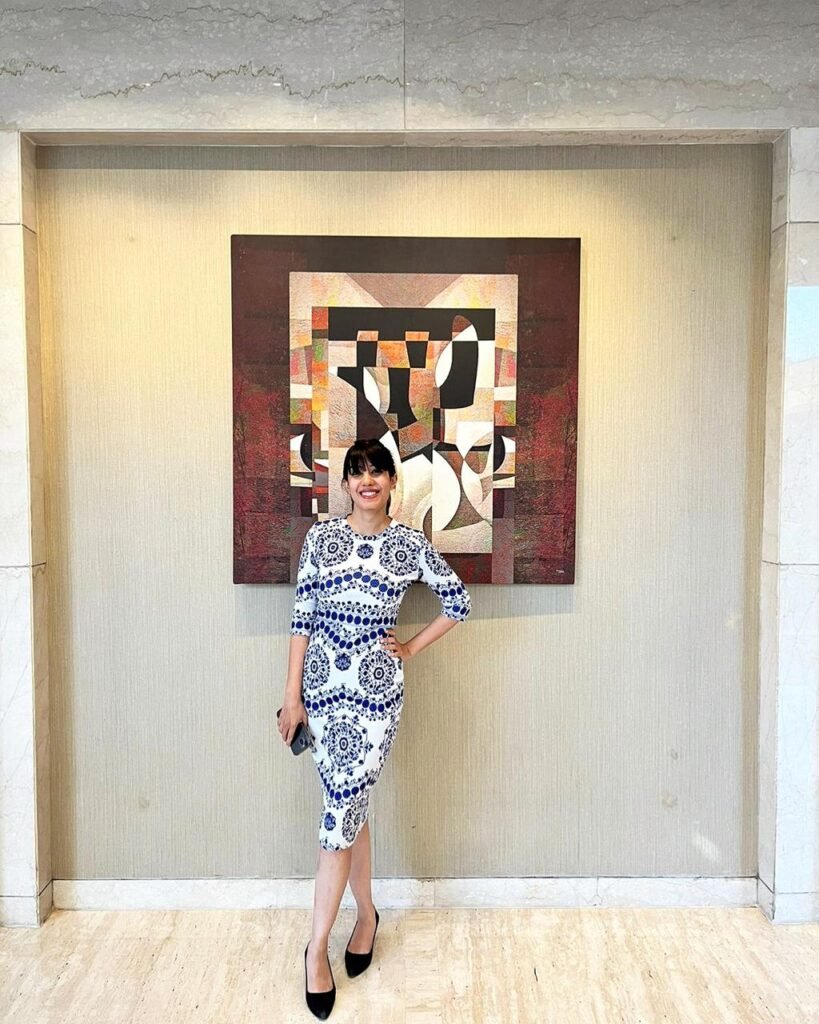
That she is quiet, graceful, and reserved. It is usually the first impression. She does not correct people, because the reveal is more entertaining that way. Once she is comfortable, the sarcasm appears, the filters disappear, and she is frequently the one making everyone laugh. She does not take herself too seriously. The people who have seen both versions have the most accurate picture.
She describes herself as equal parts composed and chaotic, which is probably the most honest two-word summary of someone who professionally builds brand strategy and personally dreams of a farm full of stubborn donkeys and a duck nobody remembers adopting.
“I like to think I am equal parts composed and chaotic.”
The gap between someone’s first impression and their full self is something most people sense but rarely name this directly. She names it and then explains exactly why she lets the gap exist: the reveal is more fun. That is a specific kind of self-awareness that only comes from having watched people’s expressions change when they figure out who she actually is.
A Non-Linear Path Is Not the Same as No Direction
If someone younger feels anxious because their career path looks non-linear or unconventional, what would you want to tell them?
Do not confuse a non-linear path with a lack of direction. And give yourself permission to change.
The anxiety usually comes from the assumption that choosing one path means staying on it forever. But careers are not contracts. They are journeys. Every role she has held has taught her a different skill, and together they have shaped how she thinks and works today. What once felt like a zigzag now looks like a story that makes complete sense.
“Don’t confuse a non-linear path with a lack of direction. Careers aren’t contracts. They’re journeys.”
She says this as someone who moved from diary-writing child to content writer to brand communicator to marketing manager, with an army relocation somewhere in the middle. The zigzag she is describing is her own. The fact that it now makes sense in retrospect is exactly the point, and exactly what someone at the start of that zigzag most needs to hear.

A Note From Decoding Draupadi
What stayed with us is the animal sanctuary. She mentions it three times across this conversation, always slightly apologetically, as if she is aware it sounds like a digression from the marketing career story. It is not. It is the clearest thing she says about what she actually wants her life to be, and it has been there, quietly, for years.
The Maya Angelou quote she returns to is worth sitting with too: not merely to survive, but to thrive, with some passion, some compassion, some humour, and some style. She is not quoting it to sound impressive. She keeps coming back to it because it is the most honest description she has found for what she is actually trying to build.
If this felt like someone you know, share it with her.
Self-doubt is a terrible decision-maker. You don’t have to feel 100% confident to take the next step. More at @decodingdraupadi.
Ashmeet Bagga is Manager, Brand, Advertising and Social at Bajaj Markets. This interview was conducted as part of the Decoding Draupadi Brand Manager Series.