
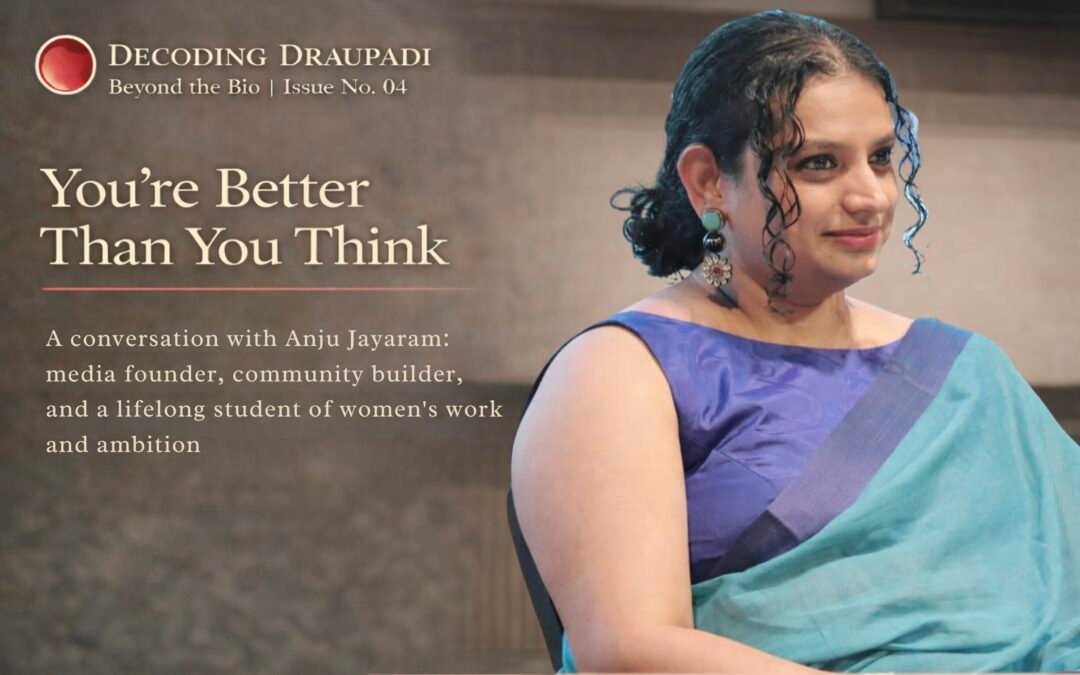
Anju Jayaram on the myth of the linear career, why the gender pay gap burden keeps landing on women, and what fourteen years of building taught her about staying the ground.
I went into this conversation with a list of questions and came out with something more useful: a clearer way of thinking about several things I had been circling around for a while. Anju Jayaram has had a career that does not photograph well on a LinkedIn profile. Pharma, then media, then community building, then EdTech, now something she describes simply as exploring. No clean arc. No single headline. But sit with her for an hour, and you realise she has thought harder than most about what it means to build for women in India, what it costs, and what actually lasts.
Anju was the Co-Founder of Women’s Web, a digital media platform that ran for fourteen years on almost no external funding before closing in 2024. She is based in Bangalore, currently enrolled in the Independent Director Certification Program at IIM Bangalore, preparing for Independent Director positions on company boards. She is also exploring dance, working on long-form writing, and doing a few projects. She called herself, without apology, a student.
I spoke to her in March as part of Decoding Draupadi’s ongoing effort to document the perspectives of women who are shaping how we think about women and work in India. What follows is what I took away from that conversation.
On identity after the work ends
I asked Anju, as an opening question, who she is today. Not the LinkedIn version, but the real one. It tends to produce either a rehearsed answer or an honest one. Hers was the latter.
“For a long time, I identified as brand manager at Dr. Reddy’s. Then Co-Founder of Women’s Web. Then Women’s Web became my longest identity, ten years of calling myself that,” she said. “And then we closed it. And I had to figure out who I was without that label.”
What she is doing now, she said, is the Independent Director Certification Program at IIM Bangalore, doing a few projects, exploring dance and some other arts, trying her hand at long-form writing. She called herself, without apology, a student who is exploring.
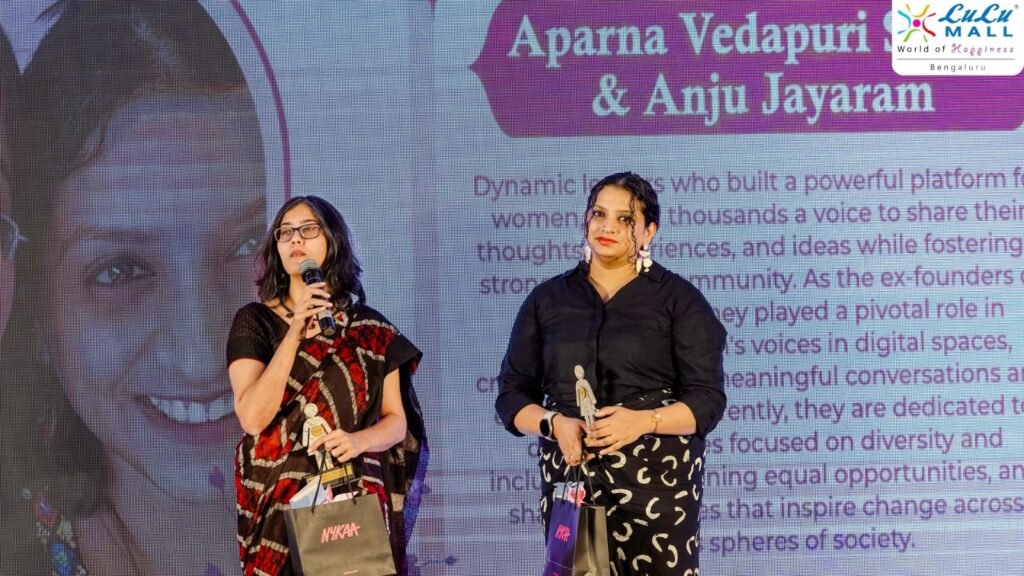
This is worth pausing on. Women’s Web closed in 2024 after fourteen years, bootstrapped almost entirely, except for one crowdfunding round, in a media environment that has been brutal to independent publishers. The closure was not sudden. It was a decision that Anju and her business partner Aparna Vedapuri Singh, Founder of Women’s Web, had been sitting with for almost two years. “It was a very practical decision,” she said. “More than an emotional one.” Though she was quick to acknowledge that after fourteen years, the two things are hard to separate.
What I learnt here: the honest version of closing something is rarely told. Not the pivot story, not the lessons-learned post. Anju told it plainly and moved on. And the more interesting question, it turned out, was what comes after an identity dissolves.
On building without money and markets that move faster than you can
I asked Anju what fourteen years of running a bootstrapped media company for women taught her about business sustainability. Her answer was not romantic.
“When you look at a business purely as a business, as a vyapaar, it needs to be a lot more unemotional. Running with passion alone is not enough. There needs to be practicality. If you have to close something and it’s time to close, you close.”
She also pointed to something that does not get said enough about the current operating environment. “The market changes faster than it used to. In the last four years alone: COVID, then recession, then wars. Multiple major disruptions in very short cycles. You cannot foresee all of it, but you need to anticipate and make practical choices. These cycles are faster now. And shorter.”
This landed for me personally. At Decoding Draupadi, we built an AI-powered stock image library for brown women, a genuinely needed thing, and then generative AI made the use case redundant faster than we could execute on it. The market does not wait for you to finish building. Anju’s version of this played out over years, not months, but the lesson is the same: agility is not a strategy. It is a survival condition.
On Women’s Day, observance vs. celebration, and who the discourse is actually for
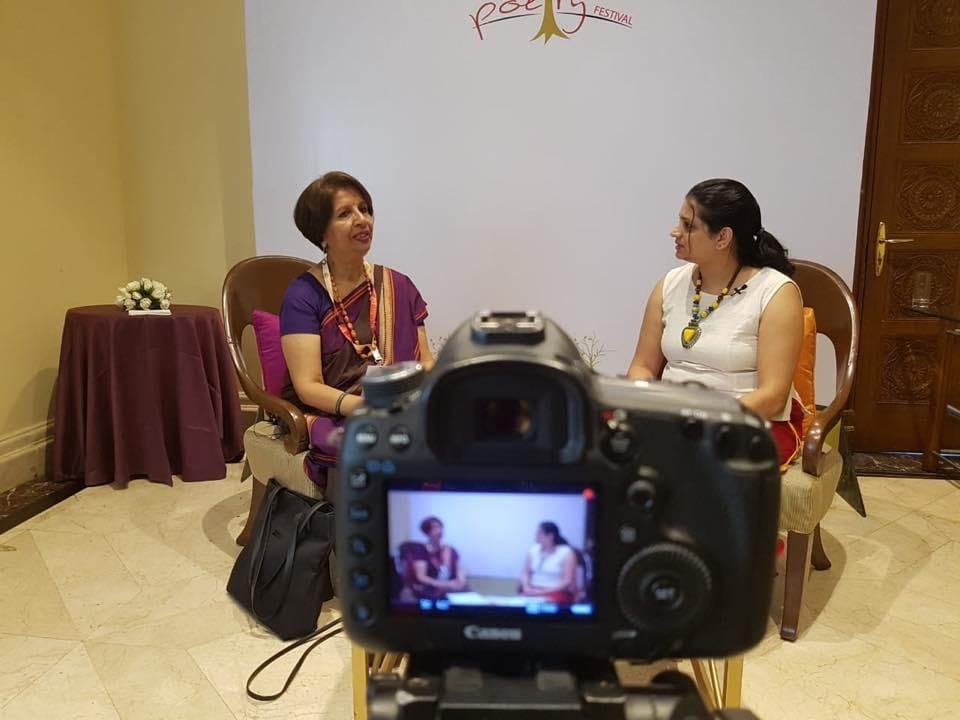
Women’s Day had just passed when we spoke. I asked Anju, who had been producing content about Indian working women since before Women’s Day campaigns were a category brands spent money on, whether the narrative had actually changed, or whether we are just repackaging the same ideas in better design.
“There is everything in the universe,” she said first. “Good, bad, ugly.” And then: “There were a few years when things were looking better. The discourse was forcing some actual introspection. That has probably gone down a little bit. Maybe it’ll come back up. These things take a long time.”
On Women’s Day specifically, she drew a distinction I want to hold onto. “The day is supposed to be an observance. A discussion about women’s issues. Steps to be taken. It needs to be more practical than celebratory. Celebrating certain women, celebrating all women, that’s great. But it is also about forecasting for the year. Talking about existing challenges. Planning next steps. That agenda gets lost in the celebration.”
She then said something that made me laugh, because it is completely accurate: “It seems to be the day when most people start looking up International Men’s Day.”
What I learnt here: observance and celebration are not the same thing. At Decoding Draupadi, our community kept asking whether we were doing something for Women’s Day. And something about the celebratory machine feels dishonest to me, not because celebrating women is wrong, but because celebration so reliably functions as a pressure release valve. You mark the day, feel good, and go back to business as usual. Observance is harder. It requires you to stay with the discomfort of what is not yet fixed.
On the gender pay gap and who keeps getting handed the problem to fix
I asked Anju about the gender pay gap: not the well-documented numbers, but the underreported reason it persists. Her answer was immediate and precise.
“Even in the most evolved corporates, the discourse seems to be pushing the burden on the woman. You need to upskill yourself. You need to be more confident. You need to negotiate more. You need to be more visible. So it becomes a self-development project that we end up giving women.”
She was quick to say that some companies genuinely do look at systemic issues, but they are, in her estimation, a minority. The more important question, she said, is one the company needs to ask itself: “How does your system actually incentivize the gender pay gap? How are you working to make sure it equalizes? Maybe women should negotiate more. But can you offer more transparent salaries?”
The salary transparency point is one I’ve been watching closely. An initiative that attempted to build a public board of fair salaries in India was pressured into taking it down. The information existed. The infrastructure was built. And it was killed because transparent pay is, apparently, a threat to the companies whose pay is not transparent. The burden stays where it has always been: on the woman to figure out what she is worth in a market that actively obscures this information.
On DEI budgets, geopolitics, and putting your money where your mouth is
Anju turned a question I asked her back on me, which was disarming. I had asked how she tells when a company actually means its DEI commitments versus when it is purchasing legitimacy. She first asked me: how much DEI activity am I actually seeing from companies right now?
Not much, I admitted. She nodded. “DEI departments in a lot of companies have been dismantled. Projects that ran for years have been dismantled. The budgets, they say, have moved to L&D. But when you do not actually assign a budget as a corporate, everything is finally about where you put your money. Unless you’re assigning a budget for x, you cannot measure x.”
She connected this to the broader geopolitical moment, a point that I think is underappreciated in conversations about Indian corporate culture. The global rollback of DEI, accelerated by shifts in the US, has given companies everywhere a permission structure to deprioritize it without saying so directly. “It will have ramifications,” she said. “We’ll see how it evolves.”
On the jungle gym career and coming back after a break
Anju’s career, spanning pharma, media, community building and EdTech, covers four entirely different industries. I asked her what she sees as the through-line now, looking back at a series of bets that must not have always felt like bets at the time.
Her answer gently pushed back on the framing. “Women’s careers largely look like this,” she said. “We end up having gaps. We end up having breaks. We end up pivoting. If not earlier in the career, later. Women’s careers are famously called the jungle gym, not the straight ladder. It is not unusual.”
She then shared something she tells women returning from career breaks, something concrete and counter-intuitive enough to be worth repeating in full. Women who return to the workforce after two or three years away often find themselves offered roles two levels below where they left. The instinct is to stay in the same sector, where your experience is recognised. But Anju’s advice is the opposite: move sectors. “In another sector, you have more learning and you are navigating newer things. You put on a learner’s hat. You’re not working below your level. You’re working on something new. The learning mindset reframes the whole thing.”
The pressure points that cause women’s careers to fork, she noted, are consistent: a young child, or children, or elder care. “Hopefully, things will change and we’ll have more equality in those areas. And everyone’s careers will look like the jungle gym, not just women’s.”
On ambition at 40 and the company that no longer needs you
Ambition, I told Anju, is not static. What you want and why you want it changes. I asked how her relationship with it had evolved.
“When I was younger, ambition felt very straightforward. Get promoted, promoted, promoted, head the company. My career took loops, but I did lead a business unit. What I’m probably getting to now, I’ve just turned 40, is wanting something that feels more holistic.”
She talked about how companies have become more transactional. “There is a layoff, and whether you’re a good performer or not a good performer doesn’t really matter. So you have to start looking at how you want your life to look, more holistically. Having different interests. Having time to pursue those interests. And not just being identified as xyz of xyz company. Because that fades away very fast.”
This is a thing I think we do not say enough to young women who are building their identities around their work. The company will not be loyal to you in the way that you are loyal to it. The title will fade. The brand name will fade. What remains is something harder to name: a set of things you are curious about, people you have invested in, a way of working that is yours. Anju seems to be in the middle of figuring out what that looks like for her. The fact that she is doing it consciously, at 40, rather than having it happen to her, feels significant.
On rest, laziness, and the unlearning that takes years
I asked about rest, and specifically the way working women seem perpetually unable to access it without guilt. Anju’s answer was the most personal of the conversation.
“I got conditioned to feel that sitting and being is lazy. If you’re a mother and you’re scrolling on your phone, someone will say: you’re not working, you’re not looking after your child, you’re lazy. No matter what circus you have already done since five in the morning. It has taken me a lot of unlearning to know that it’s fine to just be. And sometimes the other person is not even judging you. It is in your own head. Because you’re conditioned to feel that someone seeing you sit will think you’re lazy.”
“Occupying your own space, being okay with your own being: that is something we start learning as we grow older. I probably still have more learning to go.”
What I learnt here: the internal surveillance, the pre-emptive guilt, the condition of never being fully off, these are among the least discussed costs of being a working woman in India. It is not just about hours or workload. It is about the constant background noise of judgment, real or imagined, that makes actual rest functionally impossible for a lot of women until they have spent years deliberately dismantling it.
On creation, consumption, and what actually sparks joy
I asked Anju what was giving her joy right now. She had arrived at this answer only the day before our conversation.
“Consumption has become very easy, with AI, with OTT, with everything. But what sparks immense joy is when you create something. And that is slowly getting eroded by all the tools around. Writing, art: there are AI tools that can do it faster. But the joy of creating something with your own hands is something else. I read somewhere that human beings are meant to create, not just consume. When you’re just consuming, it starts pulling you down.”
I told her that the day before, I had spent my entire day prompting AI to do things and only realised at the end of it that I hadn’t spoken to a single person. And then I sat down to write one Instagram post myself, had to think about the copy and the design and the colours, and it felt like a playground. Anju laughed in recognition. The thing that is meant to help us create is also quietly making creation feel unnecessary. That is a tension worth holding.
The whisper
At the end of every conversation in this series, we ask the same last question: if you had a magical superpower to whisper something in the ears of women all over the world, what would you say?
Anju did not pause.
“You’re better than you think. Because if women just had the gumption of a mediocre man—”
She let the sentence trail off. It did not need finishing.
Before we ended, she added something unprompted. “There has been a lot of unraveling in the last few years in the space for women, in the world. The few good people who are still pushing forward: I hope there are many more that come around. And I hope they have the strength to dig their heels in and stay the ground. There is so much happening all over the world.”
There is, yes. And staying the ground turns out to be its own kind of ambition.
— End of Interview —
Anju Jayaram was the Co-Founder of Women’s Web, a digital media platform for Indian women that ran from 2010 to 2024. She has worked across the pharmaceutical, media, community building and EdTech sectors, and is based in Bangalore.
Anshika Kushwaha is the founder of Decoding Draupadi, a media and community platform for urban working women in India.
More conversations like this one. Less noise. More honesty. @decodingdraupadi on Instagram.