
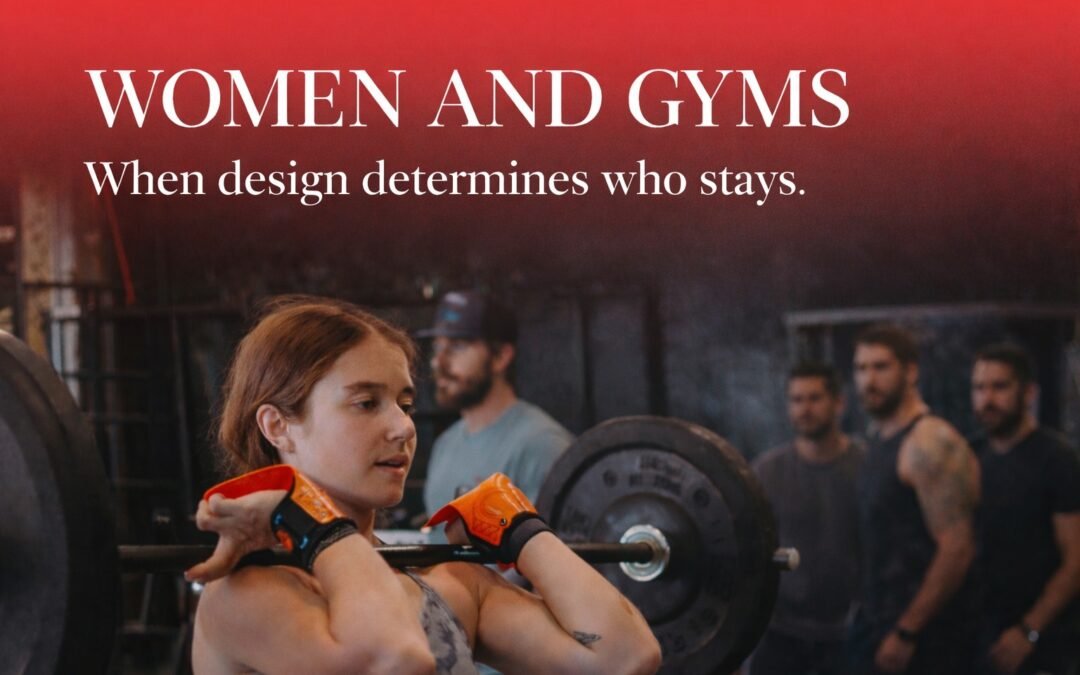
Women aren’t opting out of strength training. They’re opting out of the spaces we built for it. And India’s booming fitness industry hasn’t noticed the gap it’s leaving behind.

Silent churn rarely announces itself.
There are no angry complaints, no viral Twitter threads, no public exits. People simply stop using a product the way it was meant to be used. They come less often. They avoid certain features. Or they leave altogether quietly, and without explanation.
In gyms, this shows up in one very specific place: the weights section.
Many women don’t stop going to the gym. They stop going to the weights section.
Now on paper, gyms are neutral spaces. Same entry. Same equipment. Same rules. But in practice the weights area is often loud, crowded, aggressively competitive, and full of stares that linger just a little too long. Men grunting, plates crashing, entire groups camping around racks. And an atmosphere that, very quickly, stops feeling like yours.
What happens then is not subtle. The workout stops being about progress and becomes a running internal calculation : Am I lifting too light? Are they watching? Do I look out of place? Should I just finish quickly and leave?
That mental load is not incidental and when it changes behaviour at scale, it stops being a personal problem and becomes a design failure.
The product is losing users. Not because the outcome is unattractive but because the experience is.
THE INDIA PICTURE
India’s fitness industry is on a remarkable trajectory. According to a 2025 report by Deloitte India and the Health & Fitness Association, the sector is set to grow from ₹16,200 crore in 2024 to ₹37,700 crore by 2030. Gym memberships are expected to nearly double from 12.3 million to 23.3 million. On paper, a brilliant moment.
But the numbers obscure something stubborn.
Women account for approximately 40% of gym memberships nationally. And yet, the Deloitte report explicitly flags that women have higher rates of inactivity than men. ICMR data from 2023 shows that only 3% of Indian women engaged in any form of exercise compared to around 27% of adult women in the US.
Dr. Manisha Deka, an internal medicine specialist and competitive lifter, has written about the double burden Indian women carry: a cultural conditioning that places everyone else’s needs above their own, plus a physical environment that was simply never designed for their active participation. “India is not designed for people to have an active life,” she said “Women are made to feel unsafe even when they go for a walk.”
If that’s the experience on a pavement, the weights floor is its indoor equivalent.
Here’s the thing about the ‘bulking up’ fear doctors have been debunking it for decades. Women’s hormones quite literally won’t let it happen the way the myth suggests. But cultural anxiety has a longer shelf life than medical fact. Women’s hormonal profiles simply do not support that kind of muscle growth. But logic rarely travels faster than cultural anxiety. And in India, that anxiety has kept an entire generation of women on the treadmill and off the squat rack.
WHAT THE RESEARCH SAYS (AND WHAT WE ALREADY KNOW)
A February 2025 study in PLOS One surveyed 279 women across gym settings globally and identified four consistent themes: feeling perpetually judged on appearance and performance, a persistent sense of inadequacy, having to fight for space and to be taken seriously, and navigating harassment.
Measured language. Exhausting reality.
This is what silent churn looks like in practice. Women avoid peak hours. They rush their sets. They skip certain exercises. They default to cardio or group classes. Or they quietly drop strength training altogether.
Not because they don’t want to get stronger. But because the environment makes sustained participation too costly.
The underlying problem is not subtle. Most gyms are “gender-neutral” in policy but designed around a default male user in practice. You see it in the steep jumps between dumbbell weights that make progression harder for beginners. In machines calibrated for one body type. In a floor culture that rewards loudness and territorial behavior. In the normalization of unsolicited advice. In the persistent feeling of being a visitor in a space you’re paying for.
Spaces are never neutral. They are shaped by assumptions about who the normal user is and those assumptions decide who stays.
WOMEN ARE BUILDING WHAT GYMS WON’T

In the absence of spaces that actually feel built for them, women are creating their own.
Gym Girls Club India’s first women-only lifting community, founded by Anusha Mendonsa and Jhanvi More describes its mission simply: “Uniting and uplifting women through lifting.” They have 25,000 followers and a growing calendar of pop-up lifting events across Mumbai, Hyderabad, and other cities.
And the response tells the story better than any data point. Women show up not just to lift but because they’ve found a floor where they can focus entirely on the work. No auditing. No performance. Just the bar and what they’re capable of.
That this needs to be a dedicated community event rather than simply the ordinary experience of going to a gym says everything about the gap the industry has failed to close.
The boutique fitness surge reflects the same hunger. Deloitte’s report notes boutique studios instructor-led, community-driven are the fastest-growing segment of India’s fitness market, projected to grow at 18.8% CAGR through 2030.
Women are not retreating from fitness. They are spending their money in spaces where the experience actually works for them.
And the gyms are not keeping up.
THE REAL ANSWER ISN’T WOMEN-ONLY GYMS
Strength training is one of the most valuable long-term health behavior’s a gym can encourage for bone density, metabolic health, hormonal balance, longevity. If a significant portion of potential users is systematically pushed away from it by the environment, that is not a culture issue alone. It is a growth constraint.
The market is already experimenting in two directions. Some gyms are carving out dedicated women’s zones or timed slots and are seeing higher participation and retention as a result. Others are attempting the harder route: redesigning culture, training staff differently, rethinking equipment progression, and actively enforcing behavioral norms so the same space works for more people.
Both point to the same principle: spaces are never neutral. They are shaped by assumptions about who the “normal” user is. And those assumptions decide who feels comfortable enough to stay.
THE BOTTOM LINE
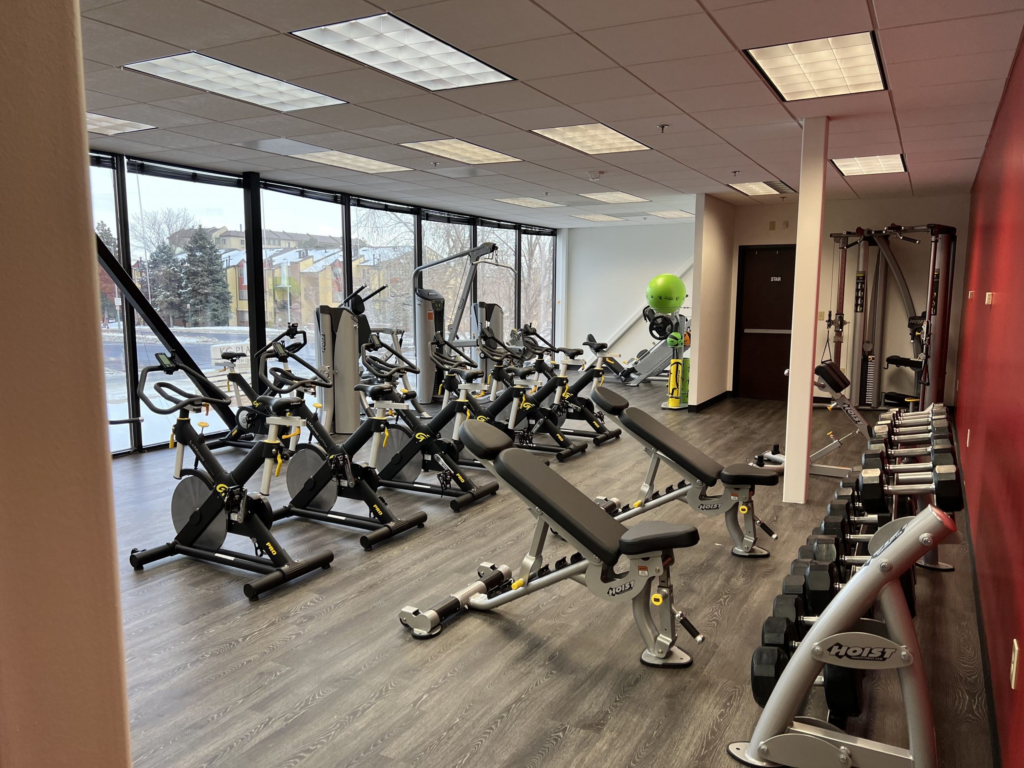
Most gyms today optimize for equipment density, floor efficiency, and a certain aesthetic of intensity. Very few optimize explicitly for beginner confidence, psychological safety, or long-term inclusion.
The cost of that omission doesn’t show up in protests or outrage. It shows up in quiet, compounding attrition.
In India, that attrition is happening against a backdrop of enormous latent demand. Deloitte estimates nearly 820 million Indians between 18 and 62 remain completely inactive. Praveen Govindu of Deloitte India has said the industry’s “next wave of growth” will require reaching “smaller towns, women and lower-income households.” The opportunity is named. The design decisions to capture it haven’t been made.
Silent churn is easy to ignore because it’s invisible. But it’s also where the biggest opportunities sit.
The moment you design not for the default user but for the users who have been adapting, avoiding, or leaving you don’t just fix a problem. You unlock growth.
The weights section doesn’t need to become softer.
It needs to become usable by more of the people who are already paying to be there.
That’s not an ideological shift. It’s a design decision.
Liked what you read? There’s more where that came from. We’re on Instagram and we don’t bite unlike the weights section @decodingdraupadi