
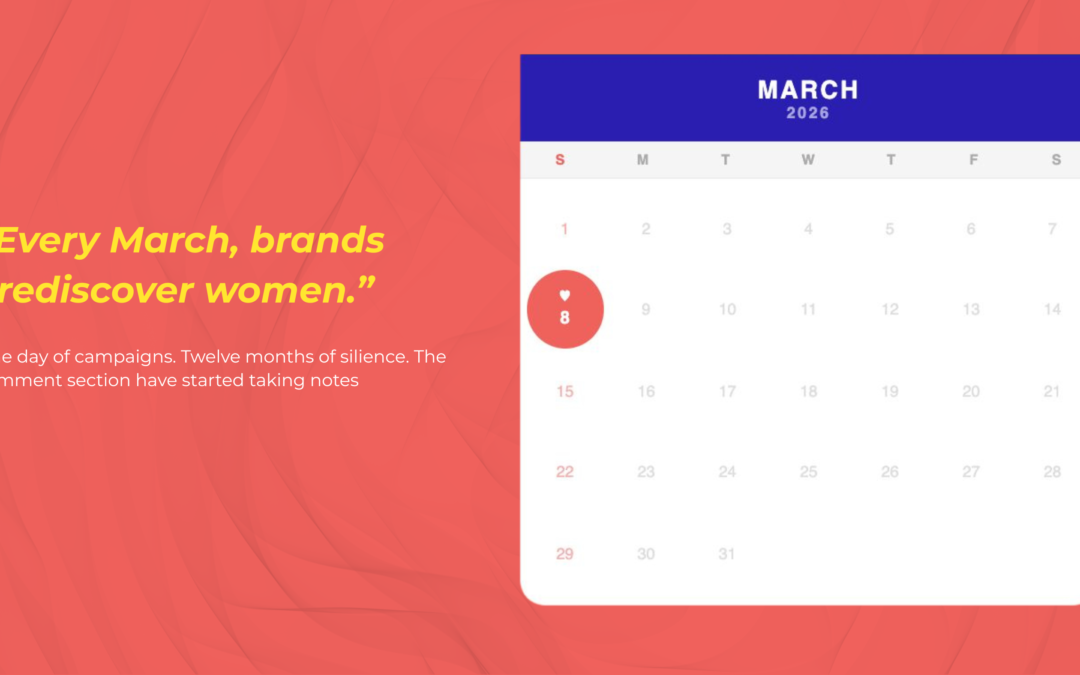
Every March, brands rediscover women. Every March, women roll their eyes. Here’s what the comment sections already know that the marketing industry refuses to learn.
There is a particular kind of exhaustion that comes not from being ignored, but from being noticed in exactly the wrong way.
Women know this exhaustion. It shows up every year, right on schedule, in the form of a push notification, a carousel post, a carefully art-directed campaign that arrives on March 8th and disappears by March 9th. Like clockwork. Like a guilt trip with a media budget.
This year was no different. Except the comment sections fought back harder than ever. And what they said in the blunt, unfiltered, occasionally furious language of people who are genuinely done is worth paying attention to. Not as a PR crisis to be managed. As a brief that hasn’t been written yet.
“Women aren’t a content category. They’re the audience. And the audience has started fact-checking.”
THE STRATEGY
Rage-Bait Is Not a Creative Idea.
Let me be precise about what rage-bait marketing actually is. It is the deliberate use of offensive or provocative content to generate an emotional reaction, knowing that the reaction not the message is what feeds the algorithm. Outrage gets shared. Outrage gets commented on. Outrage puts numbers on a dashboard that someone, somewhere, will call a win.
The logic is not irrational. A campaign that makes women angry will get women talking. The brand gets visibility. The post gets reach. Someone in a meeting will point to the engagement metrics and call it a success. But here’s what that logic skips entirely: what people are actually saying when they engage.
To illustrate, three examples from 2021 to 2026 make the pattern very hard to ignore.
The most recent one happened this March. Zomato sent a Women’s Day push notification with the line: “Women should know their limits… so they can keep breaking them.” The intention was presumably empowerment. The execution handed the sexist phrase top billing and buried the twist. The notification spread fast, not because people found it clever, but because they found it representative of something they were already tired of. Marketing professionals and everyday users alike took to LinkedIn and Instagram to dissect exactly what had gone wrong.
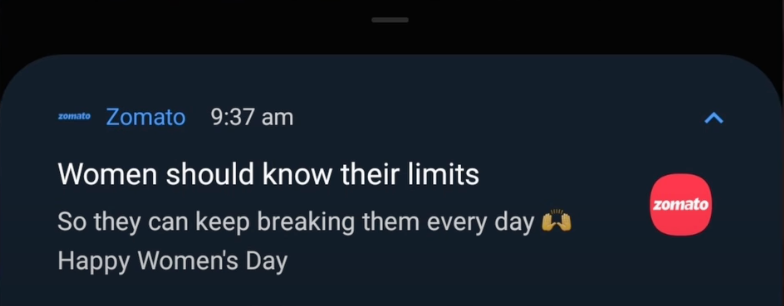
The discussion that followed on LinkedIn was pointed. One widely-shared post by Niharika Kunder laid out the core prlioblem clearly: the sexist phrase was more prominent than the empowerment message, and that visual and structural hierarchy was not an accident. It was a choice. The shock tactic did not just overshadow the intended meaning. It replaced it.
“The line that should have been the twist was the headline. When the offensive part is louder than the empowering part, what are you actually saying?” — from the comments on Niharika Kunder’s LinkedIn post
This is not a new pattern in India. In March 2022, Flipkart sent an SMS to its customers that read: “This Women’s Day, let’s celebrate You. Get Kitchen Appliances for Rs.299.” No twist. No irony. Just a straight line from Women’s Day to kitchen appliances, dropped into women’s phones as a celebration. Twitter responded within hours.
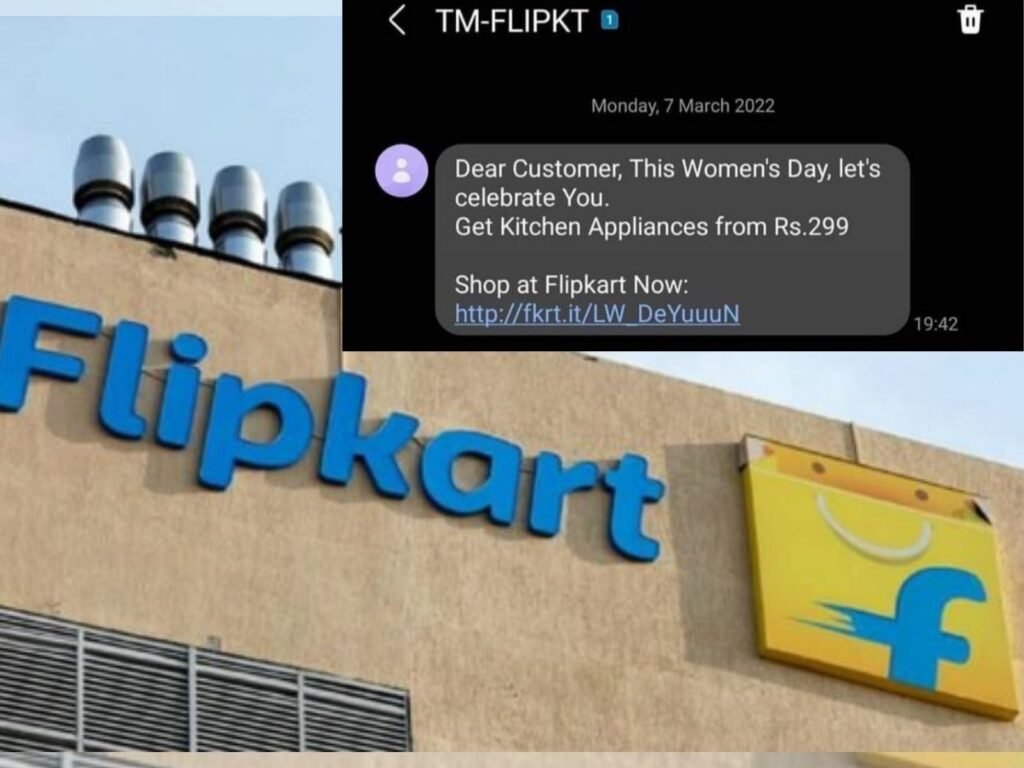
“Celebrating Women’s Day by promoting, perpetuating and celebrating gender roles. If irony had a definition this should be it.” — @VJ290481 on Twitter
Flipkart apologised publicly. The SMS had already been sent to millions of phones.
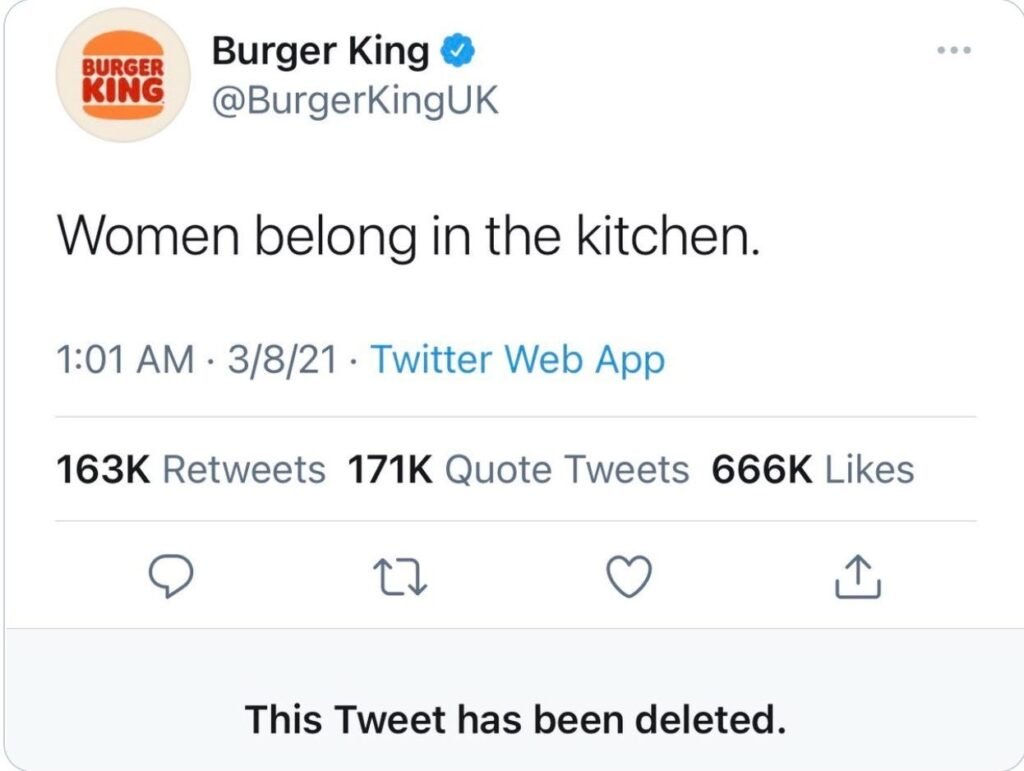
Then there is Burger King UK, which posted a tweet on Women’s Day 2021 that read: “Women belong in the kitchen.” The intention was a thread revealing a scholarship for women chefs. The first tweet did the damage on its own. It racked up 163K retweets and 666K likes before being deleted within 12 hours. The follow-up explaining the point got a fraction of that reach. Burger King apologised. The tweet is gone.
And then there is what happened this year, just days ago. Twitch Rivals announced a Women’s Day 2026 event for women streamers from its Women’s Guild. The game they chose: Overcooked 2, a cooperative cooking simulator. The announcement got 17 million views. The most widely shared response was a single quote tweet: “Y’all picked a cooking game?”
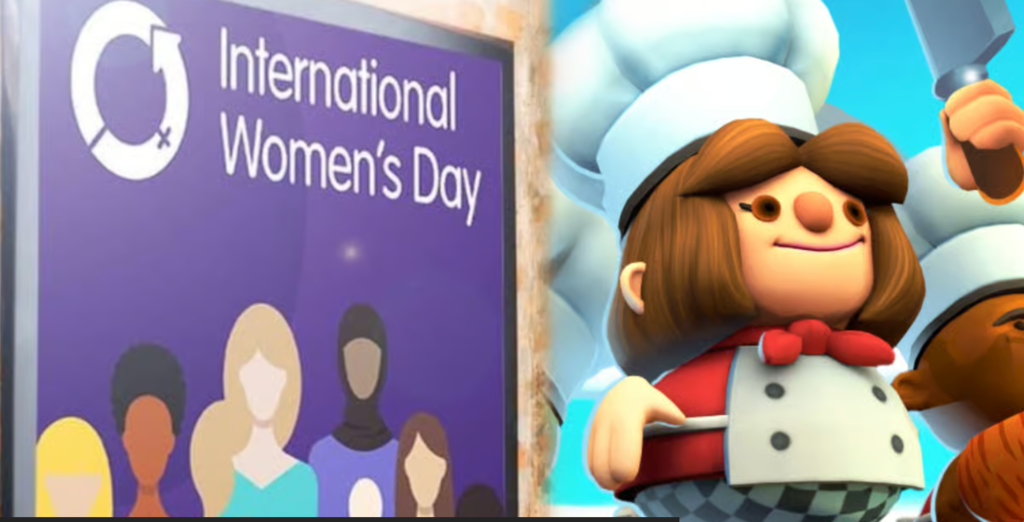
The context is more complicated here. The Women’s Guild had voted for the game. Some members argued women should be allowed to play a cooking game without it becoming a political statement. But the people who designed the shortlist, and approved the final choice without any framing or context, work at Twitch. And Twitch knew exactly the space they operate in.
“We could have really done something epic. Dominated a male-occupying game. All female Marvel Rivals teams, or BF6, Warzone. Proved that we are more than just casual gamers.” — LucyPancakes, Women’s Guild member, on X
“Twitch literally has women haters on their front page 24/7. They know what type of community they harbor. They knew that putting Overcooked as the winner would lead to those people coming into the comments and the streams making a bigger mockery of women.” — NoodleStreamer, former Women’s Guild member
Twitch issued a statement saying the game was chosen to emphasise teamwork and shared leadership, and acknowledged they should have communicated context more clearly. The event went ahead. Women in gaming communities spent Women’s Day managing the resulting pile-on.
Four brands. Three years. The same mistake, wearing different clothes each time.
THE AUDIENCE
The Comment Section Is the Focus Group You Never Ran
Here’s what the comments from this year’s Women’s Day campaigns actually contained, stripped of all the noise: precision.
Women did not just say the campaigns were bad. They said exactly why. They identified the visual hierarchy problem: why was the misogynistic line in bold while the empowering message was barely visible? They named the structural contradiction: why does an empowerment message assume that women have limits in the first place? They clocked the silence: brands that jump into comments for dark humour reels but go quiet the moment real criticism lands.
In fact, this is not a mob. This is an audience that has developed an extraordinarily sharp eye for inauthenticity. Years of being marketed to in bad faith will do that. You learn to read the subtext. You learn to spot the formula. And once you’ve seen the gotcha structure enough times, you stop being surprised by the gotcha. You start being annoyed that anyone thought it would work on you.
“The comment section isn’t the problem. It’s the brief you should have read before you started.”
What strikes me is the frustration directed not just at brands, but at the industry itself. Creative professionals in those same comment sections were pushing back on the idea that this kind of work represents creativity at all. There is a generation of people entering marketing and advertising who are being handed engagement-bait as a template and told it is craft.
It is not a craft. It is a shortcut that borrows its energy from real pain and returns nothing of value.
The audience has named this. The industry should listen.
THE INDUSTRY
What Actually Passes for Creativity Now and Why That’s a Problem
Part of the answer is structural. Marketing campaigns are measured on reach, engagement, and impressions. They are rarely measured on trust, or on what percentage of the audience came away feeling respected. The metrics reward noise. So brands make noise. Women’s Day, with its built-in emotional charge and guaranteed audience, is an efficient occasion for noise-making.
Part of the answer is cultural. There is still, in too many creative departments and strategy meetings, a fundamental failure to treat women as the primary audience rather than a demographic to be addressed once a year. When women are not in the room where these decisions are made, or when they are in the room but not being heard, campaigns get made that women would never have approved.
The most expensive focus group in marketing is the one that happens in your comment section after the campaign has already gone live.
And part of the answer is simply laziness dressed up as strategy. The shock-and-reveal format has been done. The misogynistic-hook-with-empowering-twist has been done. Zomato used it this year. Flipkart did it in 2022. Burger King did it in 2021. And in 2026, a major streaming platform still handed women a cooking game and was genuinely surprised by what happened next. Audiences have longer memories than brands give them credit for.
WHAT GOOD LOOKS LIKE
It Is Possible to Get This Right.
That said, not every Women’s Day campaign this year was a disaster. And the ones that worked are worth studying because what they have in common is not a bigger budget or a more provocative idea. It is the absence of a hook.
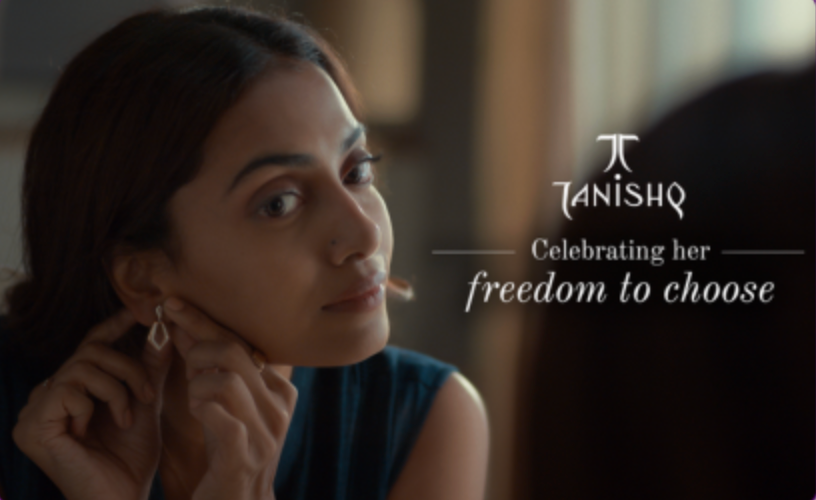
Tanishq released a film called Her Choice. It follows a woman who appears to be heading out in the morning. The reveal: it is her husband leaving. She has chosen to stay home. The film is built around a single reframe: empowerment is not a specific choice, it is the freedom to make one. No misogynistic setup. No manufactured twist. Just an emotionally honest idea that trusted the audience to sit with something complicated.
Tata Capital introduced a character called Doobara, which means “Again.” She is a corporate employee who has to repeat everything she says in meetings before it is acknowledged. The insight behind the film: according to McKinsey, 39 per cent of women in workplaces report being interrupted or spoken over regularly. The film is backed by that number and by the lived reality of anyone who has sat in an Indian office. No hook. No twist. Just a specific, documented, uncomfortable truth made visible.
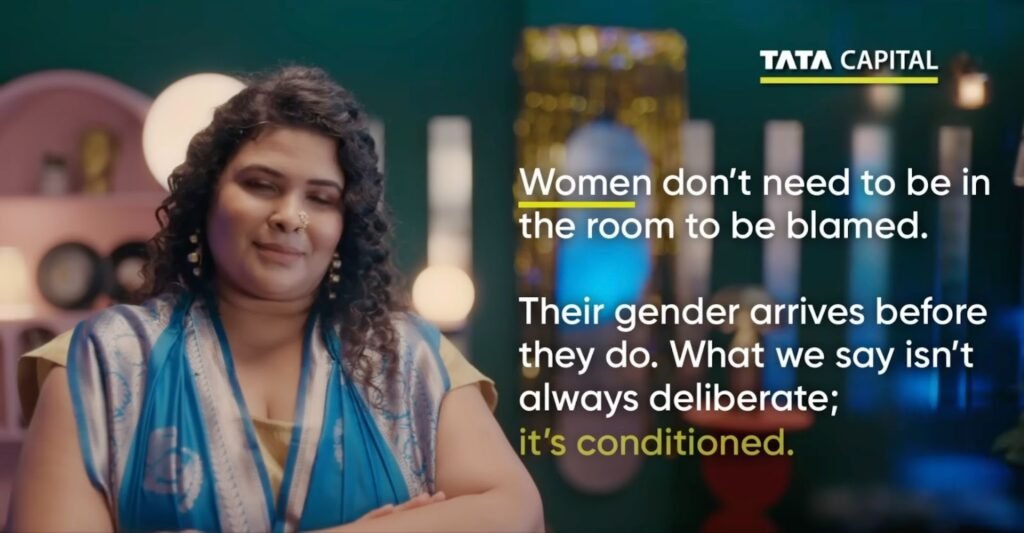
In both cases, both films are grounded in something real. Both trusted their audience. Neither needed outrage to get attention. The Tanishq film made people think. The Tata Capital film made people uncomfortable in a productive way not an exploitative one. That is the difference between a campaign that respects its audience and one that uses them.
The insight does not have to be provocative to be powerful. It has to be true.
THE FIX
The Bar Is Low. The Excuse for Missing It Is Gone.
Here is what women are actually asking for from brands on Women’s Day: it is not complicated. It does not require a brave creative brief or a provocative insight or a campaign designed to start a conversation.
It requires not using women’s pain as a hook. It requires not treating their anger as a resource to be harvested. It requires acknowledging them warmly, directly, and without making the acknowledgment the product.
One comment from this year made this with devastating simplicity. Someone wrote that women deserve everything, and suggested that a brand in the food delivery business might simply start with good food. No twist. No bait. No misogynistic setup. That comment got more engagement than the campaign it was replying to.
That is the standard. A single sentence of genuine warmth outperformed an entire campaign built on manufactured outrage. The bar is not high. The failure to clear it is a choice.
For the brands that want to do better, the path is not through better campaigns. It is through better systems. Who is represented in your leadership? How are women treated within your organisation? What structural problems are you actively addressing, not just acknowledging on a designated day? The campaign is the last step, not the first. Get the systems right and the message writes itself. Get the message right without the systems and the comment section will tell you, loudly and precisely, exactly what you got wrong.
Women’s Day will come around again next year. The campaigns will be polished. The messaging will be empowering. The comment sections will be watching.
The question is whether anyone in a boardroom will have read them by then.
Liked this? We promise our Instagram has fewer campaigns and more actual conversations. Join us at @decodingdraupadi.