 DECODING DRAUPADI
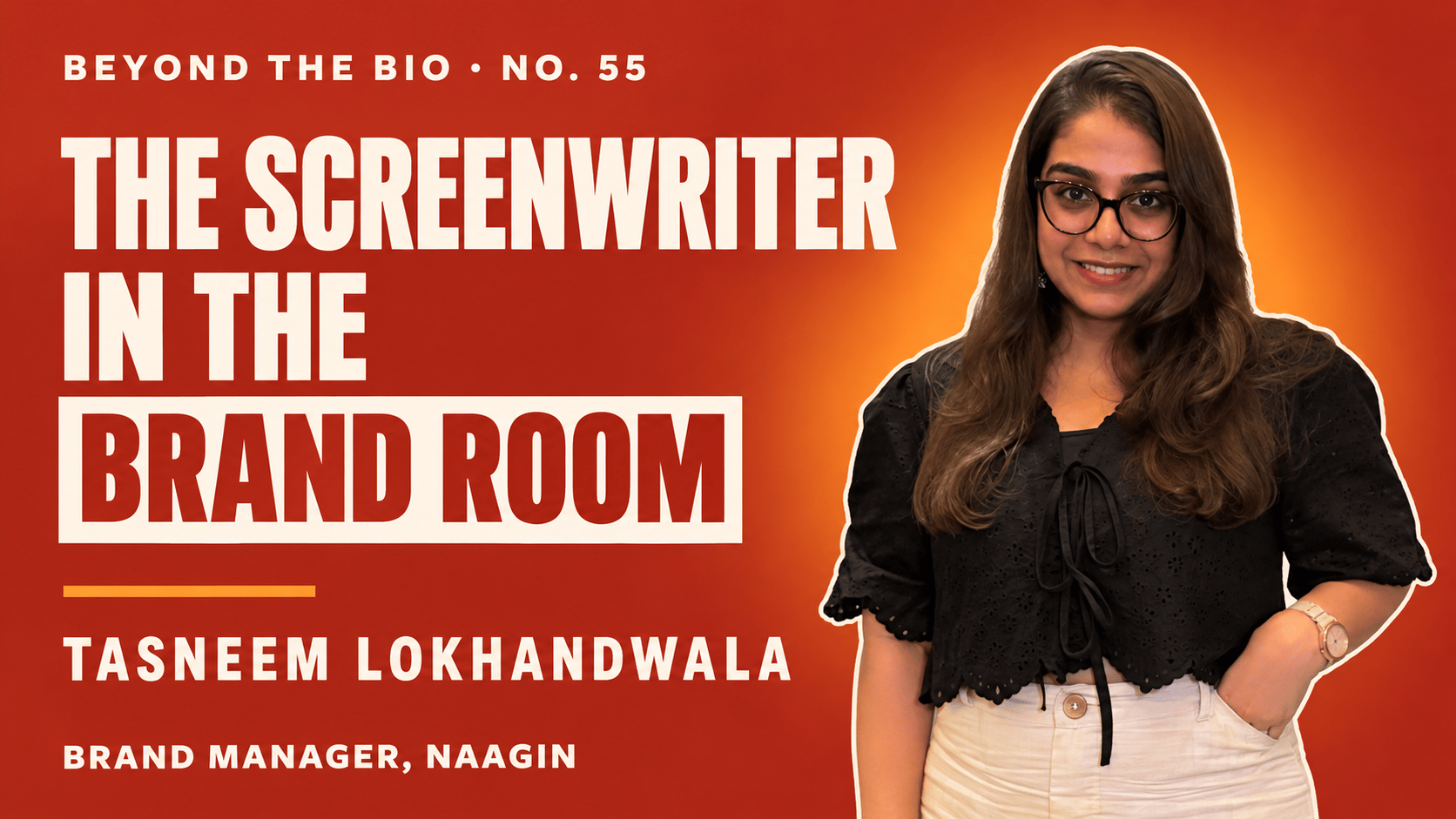
Tasneem Lokhandwala, Brand Manager at Naagin, on writing for an audience as a cast of characters, what a sampling table reveals about women as customers, and why her job was renamed once men moved into it.
In more than 50 conversations with women who build brands in India, the most useful insight has usually come from a detail of their day-to-day work. With Tasneem Lokhandwala, it came from a table of hot sauces at an advertising agency, and from the questions different people asked across it.
Tasneem is Brand Manager at Naagin, an Indian hot sauce brand that sources its chillies from across the country and sells into a market where, as she puts it, ketchup is still the sauce. She came to marketing from film school, with a degree in mass media and a screenwriting diploma from Whistling Woods International. I wanted to understand how that training shows up in the way she runs the brand.
This conversation is part of the Decoding Draupadi Brand Manager Series, in which I talk to women who build brands about how they work and what they see in the women they sell to.
On choosing the job over the script
I asked how the two titles on her profile, brand manager and screenwriter, sit together today.
She had to choose. After two years at Whistling Woods, she found the film industry hard to enter without years of low-paid work on stories she had no interest in telling. She took a job writing for YouTube, planning to write screenplays on the side. The marketing work used up her creative energy, the side writing stalled, and she spent a long stretch doubting whether she belonged in the job at all.
In the end, she committed to marketing.
“I had to pick sides. I had to commit to social media and I had to commit to marketing. Otherwise I would have died in guilt.”
When she interviewed at Naagin, her boss asked why a screenwriter wanted the role. Her answer was that social media had changed. In 2020, at her first job, the brief was to sell something or say something funny, and keep it short. Audiences now read longer stories when the story means something to them. Film school had trained her to build characters and to know who a story is for, and that had become the job.
Brand teams more often hire for knowledge of platforms and formats. Naagin hired a writer trained to build characters, at a time when social feeds reward stories that mean something. Labdhi Kothari, earlier in this series, also came in from outside the usual route, cold-emailing her way into fashion marketing with no design-school degree. Each brought a skill the standard route doesn’t teach.
On writing for a cast of characters
I asked how a line on a brief, a woman aged 25 to 29 in a certain income bracket, becomes a person she can write for.
She gives the audience names, Simran and Karan, writes them up as characters, and keeps that sheet open while she drafts. She checks each post against them, asking whether Karan would stop for it or Simran would scroll past. The habit took months of going back to the sheet before it became instinct.
The characters come from observation. Her friends, now in their late twenties, are the people with money to spend, so she studies how they buy. One of them reads every nutrition label for preservatives. Once Tasneem saw how many people now eat that way, Naagin’s content calendar made room for posts about its nutrition table.
Her example of content people share is Naagin’s Food Wars series, built on the small arguments people have about food, such as crunchy dosa or soggy, pineapple on pizza or not, and ketchup poured over fries or served on the side. She measures posts like these by saves and shares. A post works when someone forwards it to a friend and says it is so them.
“Liking is a vanity metric.”
Personas usually live in a strategy deck and get forgotten by the time copy is written. Tasneem keeps hers on the desk while she writes. Labdhi Kothari came at the same problem from the measurement side. She told us that engagement from the wrong people counts as the wrong result. Put together, the work is to decide who a post is for before writing it, and then check whether that person responded.
On selling the life upgrade
I asked how she makes people care about a hot sauce in a feed full of brand content nobody asked for.
She talks less about the sauce itself. What it does on a plate, as a dip or a marinade, matters less than what it does for someone’s day. For a working mother, it is a quick snack for her child without planning tomorrow’s meals. For a bachelor living away from home, it is the difference between food that fills him and food he enjoys. She calls it a life upgrade more than a food upgrade.
Naagin carries the same idea into its packaging. The chillies come from different regions of India, and the labels tell their story. Kantha Bomb, made with Kanthari chillies, carries a black drongo, the bird that eats them. Tasneem describes Naagin as the brand that created the hot sauce category in India.
“It’s not about the product. It’s about the emotion that fuels it.”
Isha Patwardhan, who has built brands in fashion, financial services and insurance, told us that people buy what a product makes them feel. She and Tasneem work in categories with almost nothing in common and arrived at the same principle. Naagin also puts it on the packaging. A post is seen for a few seconds, and a label stays in the kitchen for as long as the bottle does.
On what women ask at the sampling table
I asked whether she sees a difference in how women and men engage with the brand.
Naagin runs sampling events at advertising agencies, and Tasneem attends as many as she can because they show her reactions she can’t get from a dashboard. Men tend to ask which sauce is the hottest, try it, and keep the conversation on heat. Women ask what they can cook with it, and why it is worth buying over a sauce from DMart or Nature’s Basket. She reads it as closer attention to ingredients and to where the money goes.
Those questions shape how she sells. Naagin’s two chilli oils are hard to tell apart for anyone outside the brand, so she works backwards. She asks which hot sauce a person liked, then recommends the chilli oil that suits that palate.
The order data points the other way. Going by her customer calls and order lists, men place more orders: bachelors buying salsa or pizza pasta sauce for a party, gym-goers adding sauce to protein wraps. She adds a caveat. The women she called were often too busy to pick up during the workday, so the calls may undercount them.
“You need to have multiple uses of that product to get me to buy it.”
The order list and the sampling table tell a brand different things. Men may be placing more orders today, but the questions women ask decide whether a bottle gets used once or every week. I recognise this as a customer. Plenty of premium condiments sit unopened because nobody showed the buyer what to make with them. If women at a tasting keep asking what to cook, recipes and use cases belong in the brand’s content plan.
On the job that got a new name
I asked if there was anything she wanted to add. She raised something about her own profession.
A few months ago, the “social media girlie” label was everywhere, and Tasneem embraced it. Looking back, she sees a pattern. Marketing, social media and PR have long been run largely by women, and the work was given light, affectionate names. As more men moved into social media, the role began to be called growth manager.
Most of the brand managers she works with at other companies are women. She can tell, she says, when a campaign was made without one in the room.
“I just hope that people realise that they are the ones helping the growth.”
This is a large part of why I started the series. A lot of what people in India see on social media and buy off a shelf was shaped by a woman in a brand team, and her name rarely appears anywhere. I have now spoken to more than 50 of them, and they are the people Tasneem means.
On brands that get it, and brands that try too hard
I asked what catches her attention in food and beverage marketing, and which brands she feels understand her.
She credits newer brands for speaking to Gen Z in its own tone. Older brands still run Diwali campaigns, while younger ones handle festive content their own way, with a Halloween post before a Diwali one. It is deliberate, she says, and it shows they have worked out who their next buyers are. But in chasing cool, many lose the meaning. The content looks good and still doesn’t tell her why the product is for her. She points to the emotional depth of the old Fevicol ads as the standard, and says she has yet to see a brand that is playful on social media and still says something.
The brands that do get her are specific. Underneat, because she still struggles to find lingerie that fits in 2026 and the brand designs around those problems. d’you, for calm packaging and five ingredients, so she doesn’t need to be a skincare expert to choose. Mokobara, for bags that work and look good. Gully Labs, for sneakers she can wear with a kurti or with jeans. She also rates the short branded series from Mokai and The Croffle Guys.
“You need a shoe, you need a bag, so why not get the best one?”
Every brand on her list makes the choice easier for her, whether through fit, a short ingredient list or a shoe that goes with a kurti. None of them depends on sounding young to do it. Much of the Gen Z marketing she criticised puts its effort into tone, while her own reasons for buying come down to clarity.
On giving yourself time
I asked what she knows now that would have saved her a year.
She wouldn’t want the year back. Content writing, screenwriting and social media all led here. What she would tell her younger self is that there is time. She once wanted to be the youngest screenwriter to win an Oscar and was in a hurry to reach the top. People still ask what she is writing next. She has made peace with this stage being slow, and with the work of growing into a role fully before reaching for the next one. She still writes, and reads screenplays with her friends.
“That doesn’t mean you have to crush your dreams or make your dream smaller or be less ambitious. It just means you have to give yourself that time to grow.”
What stays with me
The sampling table is what I keep returning to. Men and women walk up to the same bottles and ask different questions, and the women’s questions are the more useful ones for a brand. They want to know where a product fits in a week of meals and whether it is worth the money. A brand that answers them is more likely to see the bottle finished and bought again.
The other thing I keep thinking about is her method. Tasneem writes for named characters and keeps them in front of her while she works, a habit she brought from screenwriting. When she explained who she writes for, she used two names.
If this felt like someone you know, share it with her.
More from the Brand Manager Series: Labdhi Kothari on checking her growth against what she was doing six months ago, and Isha Patwardhan on building brands across fashion, financial services and insurance.
Tasneem Lokhandwala is Brand Manager at Naagin. She studied mass media and trained as a screenwriter at Whistling Woods International, and is based in Mumbai.
Anshika Kushwaha is the founder of Decoding Draupadi, a media and community platform for urban working women in India. This interview is part of the Decoding Draupadi Brand Manager Series.
More conversations like this one at @decodingdraupadi on Instagram.

Comments
Loading comments…